“I would ask all of us not to let today’s great celebration become merely a day of nostalgia for a glorious past. Instead, let us turn it into a day of new, ambitious goals for the next 100 years, and consider what this might mean for the college in this new era that lies ahead of us. I had the opportunity to read the brief speech delivered by Eleftherios Venizelos on May 29, 1929, when, in his capacity as Prime Minister, he greeted the opening of this innovative educational institution by Greek standards. And I would really like to highlight the following sentence:
“You know that in private schools, in particular, it is possible to implement innovations.” And the question I believe all of us who love this school to ourselves is whether the college today remains pioneering, bold, and innovative. And what must it do to rise to this challenge posed by Eleftherios Venizelos nearly 100 years ago,” noted Prime Minister Kyriakos Mitsotakis in his remarks at the event marking the 100th anniversary of the founding of the Athens College.
He then referred to four major challenges that the educational institution must address in the coming period.
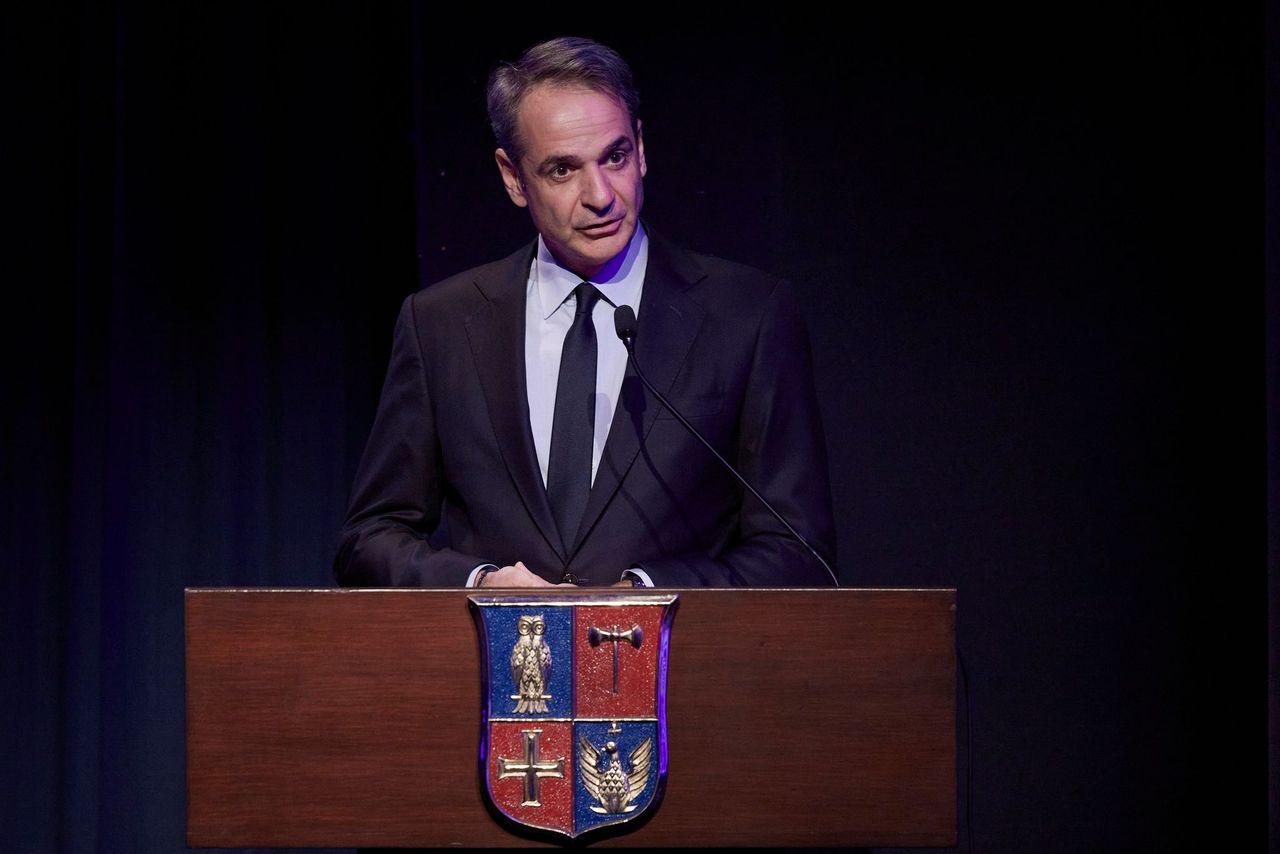
“First, it is none other than the enormous challenge of artificial intelligence for the future of education. It is inconceivable that the college would not be at the forefront of this discussion. I would like to mention, for example, that public schools are already partnering with major artificial intelligence companies so that we can explore how we can utilize these tools, for example, to simplify teachers’ work so they can spend more time in the classroom, or to support students in a way that ensures their work isn’t done by AI tools. So I would indeed like to see the college at the forefront of this discussion on how to integrate artificial intelligence into education.
The second challenge concerns the composition of the student body itself and whether the college remains a school that provides real opportunities to deserving students regardless of their financial situation. How many students ultimately enter the college through exams and how many through other means. This is something we must address; let’s not kid ourselves.
I think that in recent decades, the college has, to some extent, lost that social stratification that certainly existed in our time, and I believe the time has come to reclaim it. The third challenge, which is to some extent linked to the second, concerns the college’s financial capabilities. I envision, dear Presidents, a college that will have an endowment so robust that it will allow any student—male or female—who qualifies to enter the school on merit through exams but cannot afford the tuition to have those tuition fees covered by the endowment. And the fourth priority is linked to the priorities of our students themselves. How can the school truly become an inclusive school that recognizes diversity, respects and acknowledges the major mental health issues and challenges that we unfortunately see many children and adolescents facing, and that this will truly become a priority, so that the children here at school, first and foremost, are happy and have a good time.
We may have done relatively well in life, and to some extent we owe that to the college. But let’s not forget that there were also some who graduated from the college with unpleasant experiences, with difficult experiences, which had to do with practices that may have been acceptable in our time, but today can no longer be accepted.So I believe that the emphasis on our children’s mental health —using all the tools we can provide them so they can become well-rounded, happy individuals and creative citizens—must be a priority for the school for the next 100 years, or let’s say for the next 10 years, because we won’t be here for the college’s 200th anniversary, but the college will certainly still be here,” he said.
“And I truly wish, from the bottom of my heart, that the school we love so much will continue on this innovative path and, above all, not be afraid to change,” he emphasized.
SOURCE: APE