The political landscape, as it is taking shape a few days after the official announcements by former Prime Minister Alexis Tsipras and Maria Karystianou regarding the formation of their political parties, is outlined in the major Pulse poll, which was presented on SKAI’s main news broadcast.
The Pulse survey was conducted between May 27 and 31, with a sample of 1,108 eligible voters.
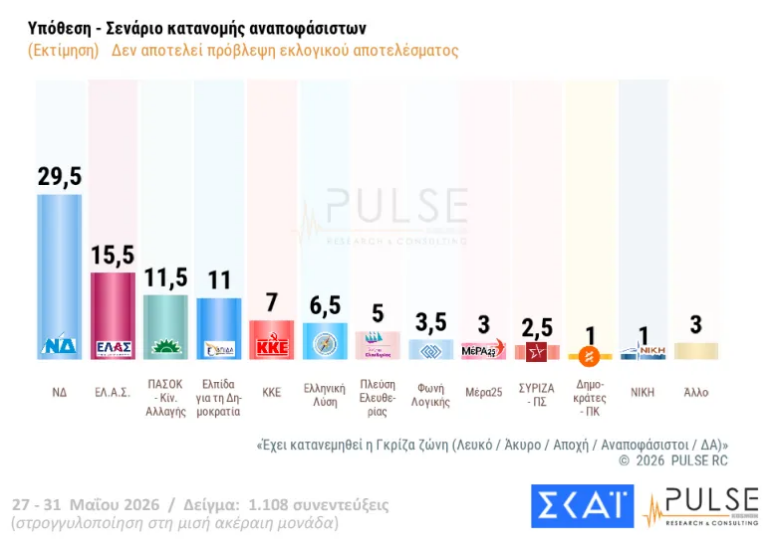
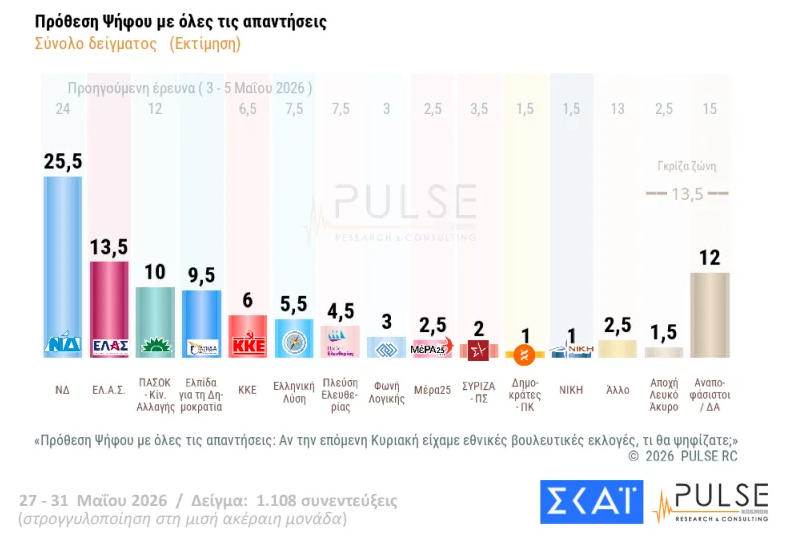
According to the results of the Pulse poll, during this specific period, major changes appear to be taking place across the entire spectrum of opposition parties—and not just on the center-left—in contrast toNew Democracy, which seems to be maintaining the percentages it had before the emergence of the two new parties (29.5% in the vote estimate), though, based on the current snapshot, it does not come close to the majority threshold, which is the goal set by Kyriakos Mitsotakis. In terms of voting intention, the ruling party appears to have risen by 1.5%.
A key element in shaping the new political landscape is theGreek Left Coalitionled by Alexis Tsipras securing second place, though trailing New Democracy by 14 percentage points in the vote estimate.
A second key point in the emerging landscape is the “battle” between PASOK and the “Hope for Democracy” party for third place.
A third factor is the significant losses suffered by Kyriakos Velopoulos’s“Greek Solution ” and Zoi Konstantopoulou’s“Freedom Course.”
Furthermore, according to the results of the Pulse poll and the snapshot of the current moment, eight or nine parties will enter Parliament, withMERA25 hoveringat the 3% threshold andVoice of Reasonat 3.5%.
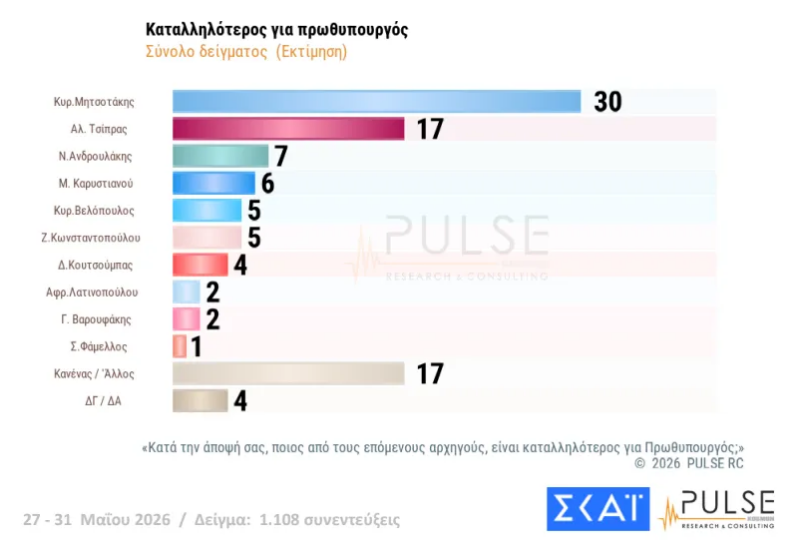
Kyriakos Mitsotakis is the most suitable candidate for prime minister
An important factor, which also serves as an indicator of voters’ intentions, is suitability for prime minister.
Kyriakos Mitsotakis is by far the most suitable candidate, with Alexis Tsipras trailing far behind and Nikos Androulakis limited to a single-digit percentage.
Voters’ selection criteria
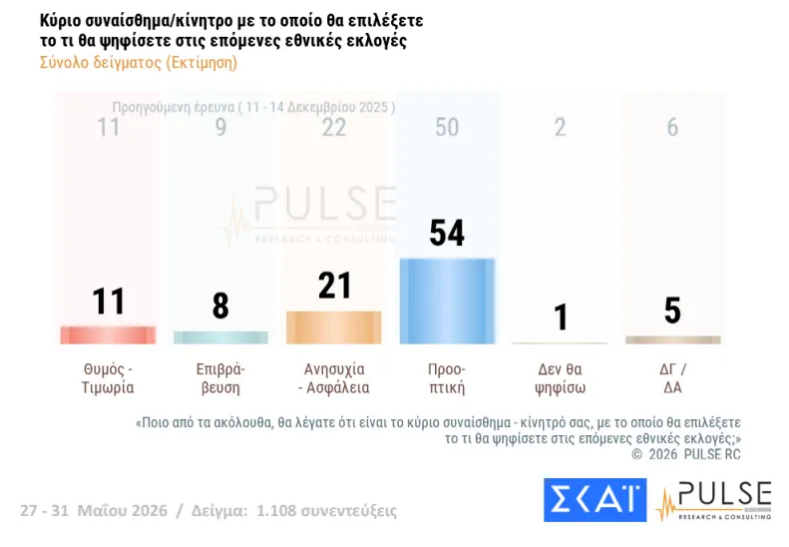
In the qualitative section of the survey, citizens were asked to state their selection criteria. As it turns out, more than half will choose the next government based primarily on the improvement of their daily lives —that is, on the prospects offered by the party’s platform and the realism of its proposals.
The Pulse survey reflects the criteria of the entire electorate, but also specifically those of each party’s voters—at least those vying for power.
Who and how many would vote for Samaras’s party - The profile of voters for the new parties
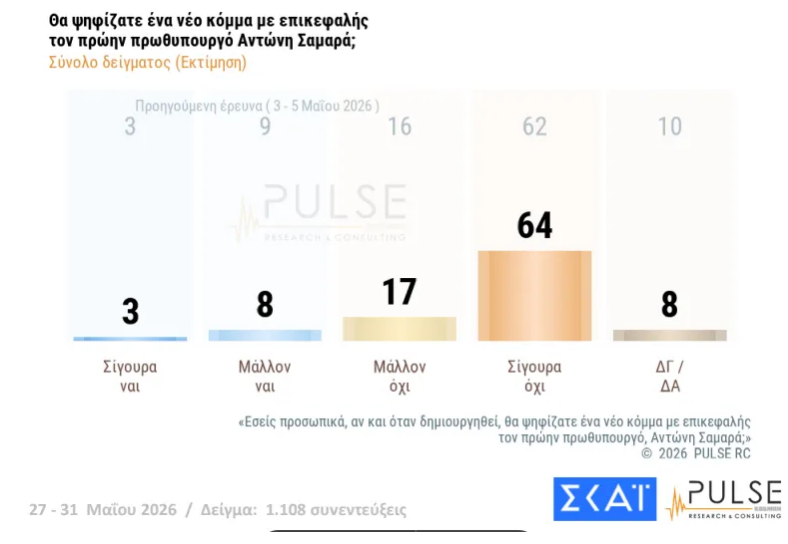
Following the announcements by the parties of Alexis Tsipras and Maria Karistianou, the potential announcement of a party by former Prime Minister Antonis Samaras appears to be the missing piece of the puzzle in the political landscape currently taking shape.
Given that Antonis Samaras ’s potential voters are expected to come from New Democracy, it is considered extremely interesting to measure any losses in the ruling party and to what extent this will affect the goal of a majority government set by Kyriakos Mitsotakis.
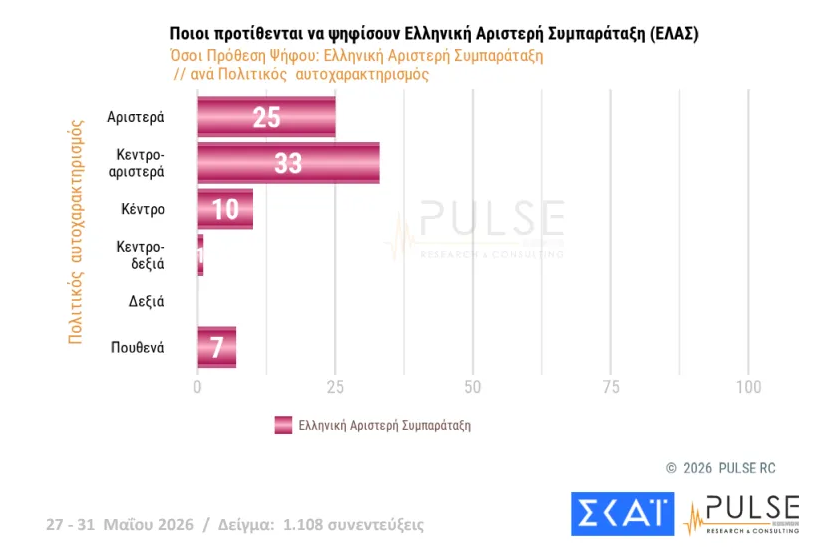
The Pulse survey details the profile of potential voters for both Samaras’s party and the two new parties, the Greek Left Alliance and Hope for Democracy.
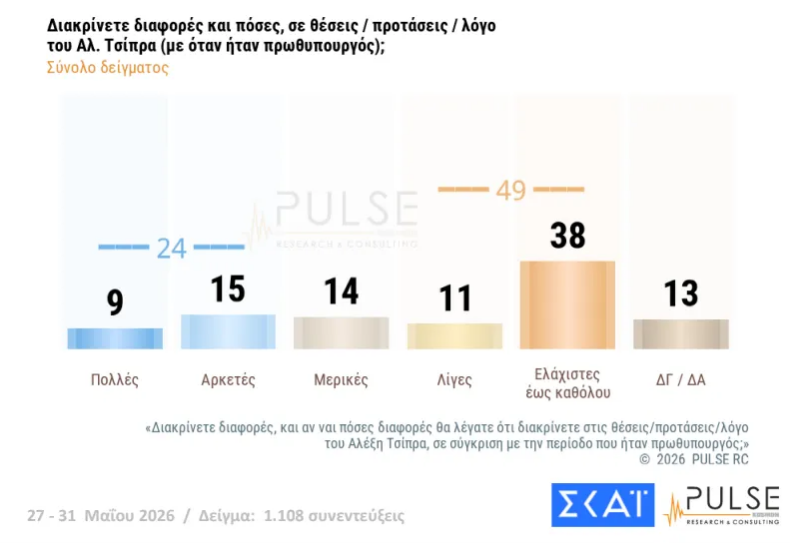
What differences do citizens see in Alexis Tsipras
The Pulse survey also captures citizens’ views on the... new Alexis Tsipras and on what differences they perceive him to have compared to the past.