The phenomenon of electricity theft in Greece is showing slight signs of decline, though it remains one of the biggest “scourges” for the wallets of law-abiding consumers, electricity providers, and the country’s power grid.
Despite the improvement seen over the past two years, the cost continues to amount to approximately 450 million euros annually, burdening those who pay on time with an average of 50 euros per year per bill.
The picture of how this phenomenon has evolved over time, the results of the audits, and the next steps to further strengthen the framework—which remains somewhat flexible— were presented at a press briefing on Friday by Deputy Minister of Environment and Energy Nikos Tsafos and HEDNO Director Tassos Manos.
At first glance, the factor generating cautious optimism is that non-technical grid losses (as electricity theft is termed) are showing a slight decline and are now at levels seen before the 2022 energy crisis, when soaring electricity prices increased the incentive for theft and led to a surge in the phenomenon.
The approximately 50,000 inspections conducted annually by HEDNO, combined with the tightening of the legal framework and the classification of electricity theft as a criminal offense punishable by up to imprisonment, appear to be yielding results.
On the other hand, the numbers and levels of losses remain particularly high, as criminal networks are becoming increasingly inventive and creative.
Such is the case with a recent group of scammers who have gone so far as to forge the signatures of unsuspecting consumers and steal electricity using others’ information, making it appear as though they have signed contracts with suppliers, resulting in the latter being asked to pay bills for services that do not belong to them in homes and areas they have never lived in.
The extent of the problem and the challenge the Operator faces are reflected in the historical trend of network losses, both technical and non-technical.
From 6.5%—the total losses during the 2012–2013 period, as a percentage of the total energy entering the network—they rose to 9.3% in 2017 and to 10% in 2021, partly due to fewer inspections conducted by HEDNO crews at the time because of the pandemic.
The peak was recorded during the 2022–2023 period, when, amid an energy crisis, total losses reached 11.2%–11.4%.
Since then, they have been on a downward trend, standing at 10.8% in 2024, while for 2025 they are estimated at 10.4%. For 2026, the target is set at 10%, though the downward trend may continue.
Electricity theft itself follows a similar pattern. From 1.1% in the 2012–2013 period, it rose to 4.9% in 2021 and peaked at 5.6% in 2023. They subsequently fell to 5.1% in 2024, with estimates pointing to a further decline this year, possibly below 5%.
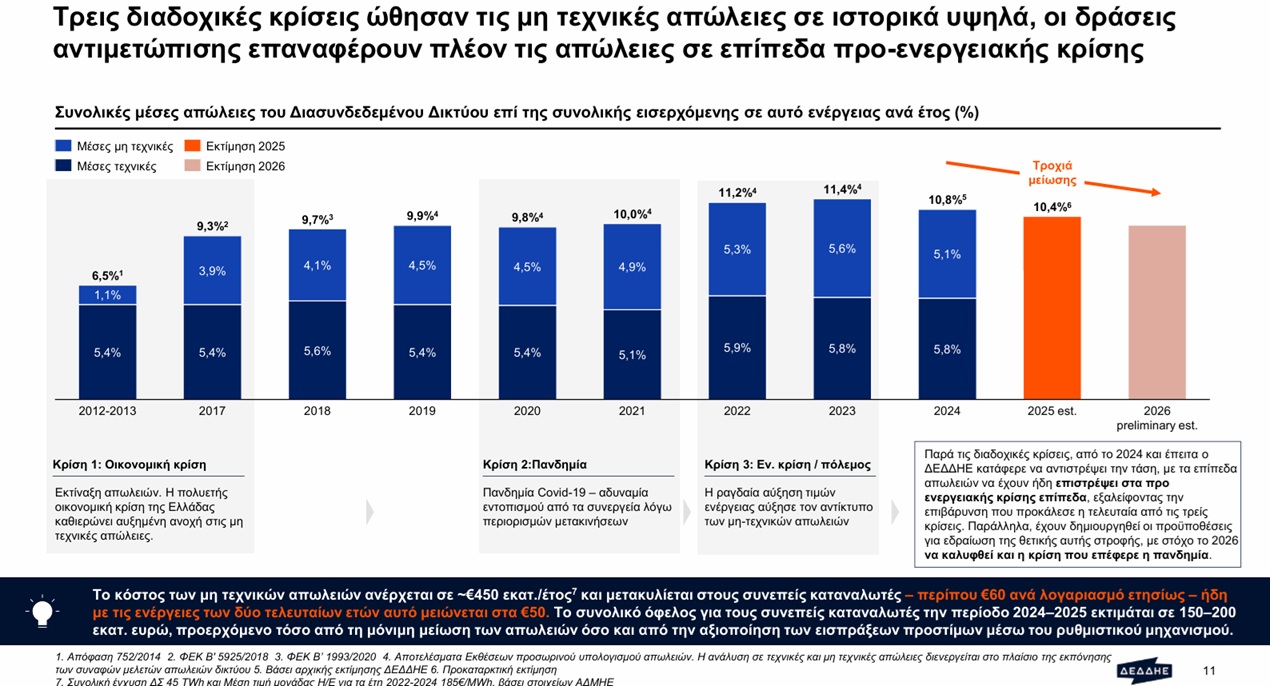
These figures are not insignificant, although the total benefit for consistent consumers during the 2024-2025 is estimated at 150-200 million and stems both from reduced losses and from the collection of fines in cases that are identified and, most importantly, finalized in court.
There are numerous law firms operating in this field that represent defendants accused of electricity theft before criminal courts and advertise that they have handled a large number of cases in which they secured the acquittal of the defendants.
“It will certainly not be possible to eliminate electricity theft entirely; criminal networks are constantly devising new ways to circumvent inspections; however, the fact that it appears to be decreasing at an annual rate of 1-1.5% translates to several tens of millions that are no longer passed on to consumers,” said Deputy Minister of Environment and Energy Nikos Tsafos.
The “loopholes” and the stricter framework
When asked what will happen from here on out, the answer is provided by HEDNO’s own estimates, which are, however, considered conservative by RAE.
In the case of the Operator, total losses (technical and non-technical) are projected at 9.37% for the year 2031, i.e., 87% higher than the 5% target set by RAEY itself, which considers the projected rate of reduction to be low. This is all the more so given that the increasing installation of smart meters—expected to be completed by 2030, covering all 7.7 million connections nationwide—will, by its very nature, make it more difficult to tamper with meters and commit electricity theft.
The need to improve the indicators is considered a one-way street, which is why the Ministry of Environment and Energy is considering further tightening the regulatory framework. “Both in terms of accelerating the overall procedures, that is, shortening the deadline for those found to be stealing electricity to file an appeal, as well as HEDNO’s response to the accused party’s request, and regarding the method of paying fines,” said Mr. Tsafos.
The main “loophole” is that the immediately assessed fine is converted into… 12 monthly installments, and the offender of a criminal offense is treated under the same regime that applies to a fully law-abiding citizen who wishes to settle a simple debt with the tax authorities.
When asked about cases of incorrect billing that had sparked a wave of reactions months ago, HEDNO leadership responded that they accounted for approximately 1.5% of audits. According to the Operator, several of these cases involved meters with obvious signs of tampering, such as broken seals, though electricity theft was ultimately not substantiated based on the prescribed protocol.
With 1.3 million smart meters installed, the 300,000 older meters
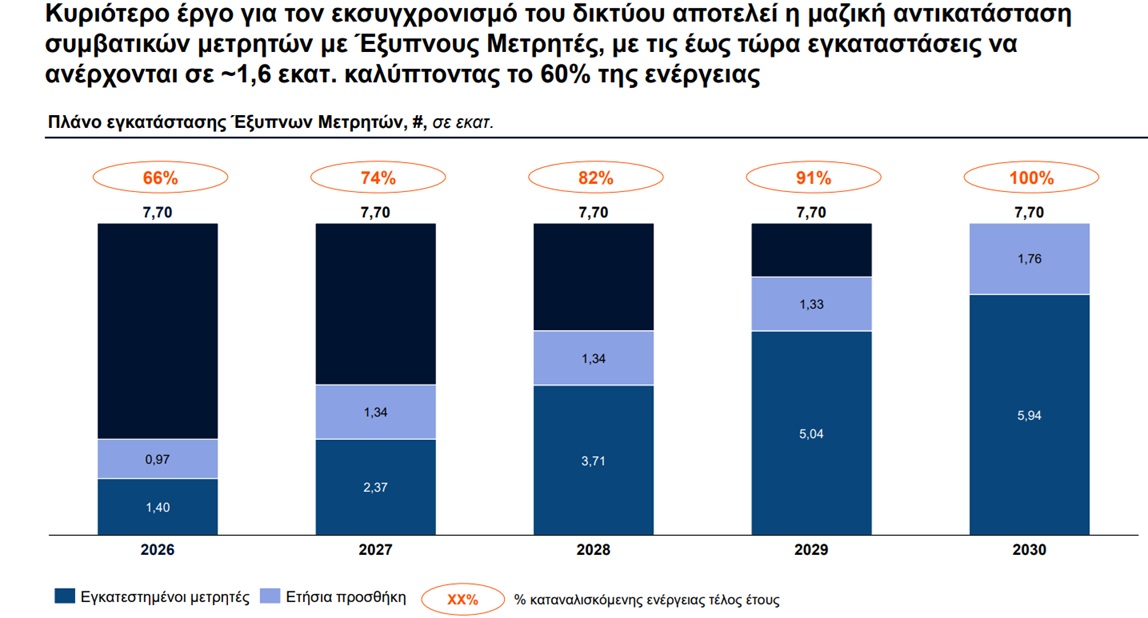
The mass installation of smart meters is set to play a central role in curbing electricity theft, which, according to the Operator’s update, is proceeding at a rate of 1.35 million meters per year.
Currently, approximately 1.4 million smart meters are in operation; and by the end of 2026, their number is expected to reach 2.4 million; by 2030, full coverage of all 7.7 million connections nationwide is expected to be achieved.
Although smart meters still account for a minority of consumers, they already cover 60% of total electricity demand, as they have been installed as a priority for large customers (small industries, department stores, supermarkets, etc.). This percentage is expected to rise to 66% by the end of the year and reach 100% by 2030.
When asked whether the smart meters installed by HEDNO meet the specifications to support 15-minute interval billing based on wholesale price fluctuations, as required by the new European framework, Mr. Manos clarified that the problem concerns approximately 300,000 meters that were ordered before 2020, when the European Directive changed.
“At the time these meters were ordered, they fully complied with the specifications. As soon as the Directive changed, we immediately adapted our new orders. As for those 300,000 meters, they will remain in the system until 2031, as stipulated by the Directive, and then we will proceed with the necessary interventions,” he noted, clarifying that aside from the 15-minute issue, these devices are recording consumption data normally—that is, they are telemetry-enabled and fully functional.
Regarding other areas of criticism directed at HEDNO, such as the speed of connection completion, the head of the agency cited data showing that the average time has decreased from 145 days in 2021 to 77 days in 2025 and 55 days this year.
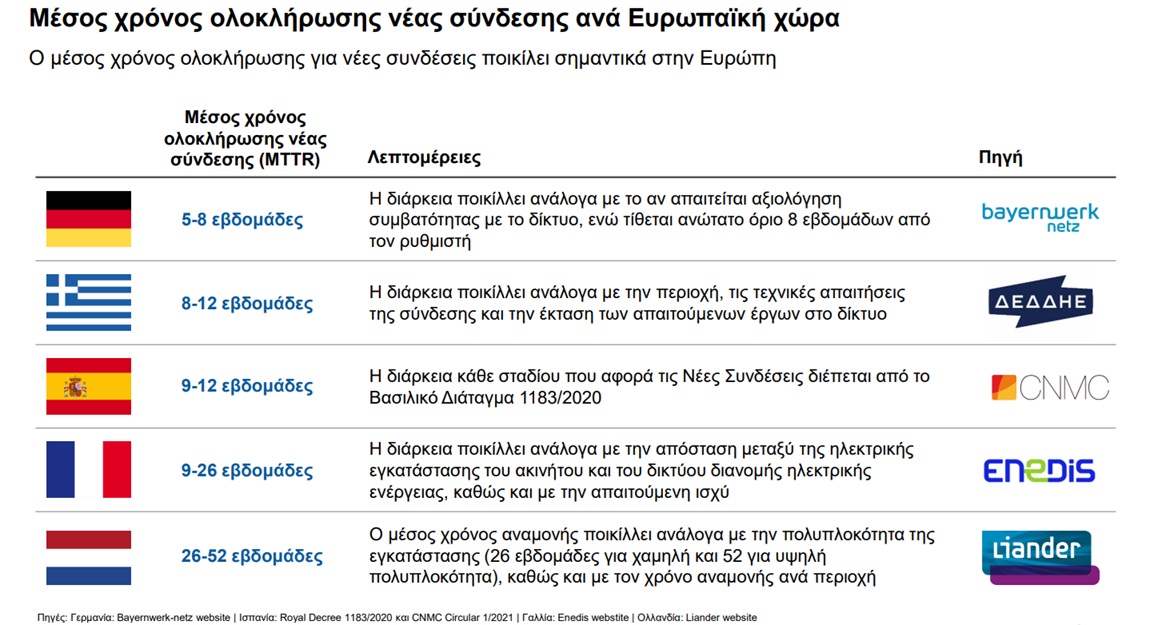
Although the turnaround time requires further improvement, performance is better than in other countries, such as the Netherlands, and comparable to that in Spain.
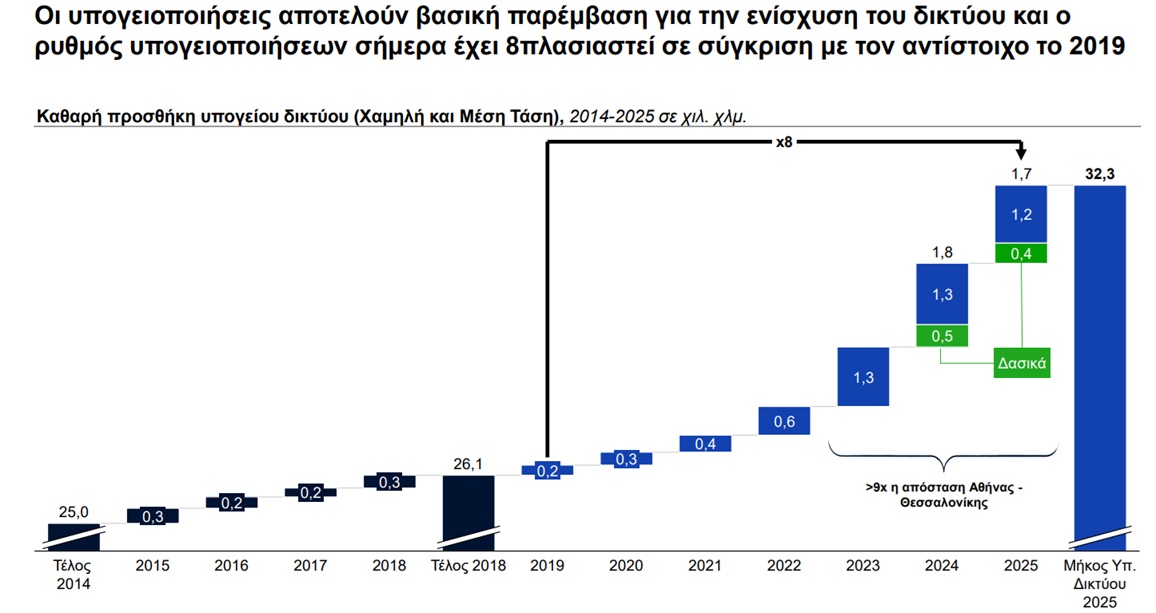
In the section concerning the HEDNO network’s undergrounding policy as a shield against the major damage increasingly caused by extreme weather events, the margins do not appear to be very large. The currently underground network totals 32,300 km, and the expenditure has been largely funded by the Recovery Fund.
Compared to the Operator’s total network of 250,000 km, this represents 13%, which is obviously a small percentage. However, regarding the question of how much it would cost to bury the largest portion of the network, the analysis has shown that it would require approximately 35 billion euros—a figure that puts the brakes on any such plans and leads to much more limited interventions.