More than 6,700 eligibility certificates have already been issued to citizens through the online platform for the “Home Renovation” initiative under the 2021–2027 NSRF, with a budget of 500 million euros, according to a joint announcement by the Ministries of National Economy and Finance, Environment and Energy, Social Cohesion and Family, and Digital Governance and Artificial Intelligence.
The first phase of the initiative’s implementation follows the signing of the relevant Joint Ministerial Decision by Stavros Papastavrou, Minister of Environment and Energy; Domna Michailidou, Minister of Social Cohesion and Family; and Digital Governance and Artificial Intelligence, Dimitris Papastergiou, Deputy Minister of National Economy and Finance Nikos Papathanasis, and former Deputy Minister of National Economy and Finance and current Deputy Minister of Transportation Giorgos Kotsiras.
The goal of the initiative—which is part of the government’s broader measures to address the housing crisis, with a budget exceeding 6.5 billion euros—is to increase the existing housing stock and boost the supply of housing. It is aimed at low- and middle-income households and funds renovation and modest energy-efficiency upgrades to properties—a combination that makes this initiative the first pilot program of its kind in the EU.
Only natural persons are eligible to participate:
- owners or usufructuaries of a single-family home, provided that, after the completion of the work and for at least five (5) years, the property will be used as their primary residence or will be made available for long-term lease at a fixed rent for at least the first three (3) years.
- owners, usufructuaries, or bare owners of an unoccupied residence, which they already use as their primary residence, with the obligation to maintain its use as their primary residence for at least five (5) years following the completion of the project.
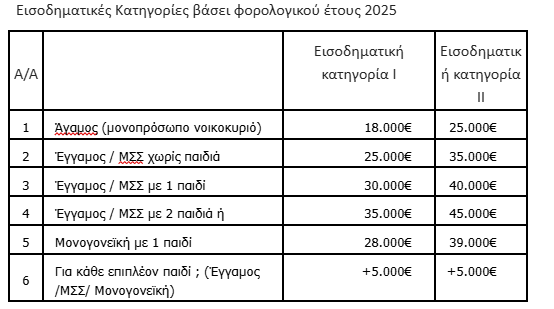
The maximum grant amount is 36,000 euros per residence, while additional coverage of up to 2,500 euros is provided for studies, permits, and inspections.
Depending on income bracket and the fulfillment of specific requirements, the program offers a grant ranging from 70% to 95%.
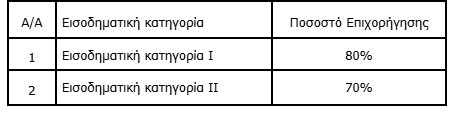
Specifically, the subsidy amounts to 80% for low-income beneficiaries and 70% for middle-income beneficiaries, with the possibility of a cumulative increase of 5 percentage points for: a) homes in mountainous or island regions, b) beneficiaries who are either single-parent families where the parent has sole custody, or families with three or more children; c) beneficiaries who are individuals with disabilities or have a family member with a disability (spouse or dependent). Specifically in the case of a person with a disability, the supplement applies exclusively when the subsidized residence is intended for owner-occupancy.
Eligible homes are those that have a building permit issued by December 31, 1990, are legally standing, have not been designated for demolition, are classified in energy efficiency category C or lower, and have a living area of up to 120 square meters, which increases to 150 square meters for families with three or more children (without increasing the maximum grant amount of 36,000 euros).
Eligible projects include renovation work accounting for 60%–80% of the total funding amount and minor energy upgrades accounting for 20%–40% of the total funding amount, with the aim of improving functionality, safety, and energy efficiency of the residences.
It should be noted that residences included in the Program may not be made available for short-term rental for a period of at least five years following the completion of the Program.
The Certificate of Eligibility is issued either through gov.gr under the “Property and Taxation” category and the “Citizen Subsidies” subcategory, or at www.anakainisi.gov.gr, until Friday, July 31, 2026.
Specifically:
- The citizen logs in using their Taxisnet credentials, and their personal information is displayed.
- In the next step, their annual income—as reported to the Independent Authority for Public Revenue (AADE)—is displayed, along with the result of the eligibility check indicating whether they are eligible and, if so, in which category.
- For married couples or civil partners, one of the two spouses initiates the process. If the applicant is eligible and to complete the process, the spouse’s consent is required by following the same procedure to log in to the platform.
- The platform then displays all properties owned by the citizen that meet the eligibility criteria listed above, and the citizen selects one or more of them in order to obtain a certificate for each. It should be noted that the issuance of a Certificate of Eligibility for one or more properties does not automatically mean that these properties are included in the Program, nor does it constitute approval of funding. In the second stage, each household may submit a Funding Application for up to one closed residence and up to one open residence, with a maximum grant amount of 36,000 euros.
- The certificate is issued automatically and is available both in the Citizen’s Portal on gov.gr and in the gov.gr Wallet.
The platform was developed by the General Secretariat for Information Systems and Digital Governance of the Ministry of Digital Governance and Artificial Intelligence. Citizens’ data is sourced through the Interoperability Center of the General Secretariat for Information Systems and Digital Governance.
In a second phase of the initiative’s implementation, holders of the Eligibility Certificate will submit their applications for funding to renovate their properties via a separate online platform.
At a time when the housing issue is one of the most significant social and economic challenges facing Greece and Europe, the “Residential Renovation” Initiative puts the social orientation of the NSRF 2021–2027 into practice.