The apprenticeship system is evolving into one of the most effective tools for linking vocational education to the real needs of the labor market, as well as an excellent pathway for students who wish to enter the labor market immediately.
In fact, the Ministry of Labor and the Public Employment Service (DYPA) are investing in a “training-on-demand” model, which brings the public and private sectors closer together and, in some cases, even leads to nearly 100% employment of graduates.
Applications and Specializations
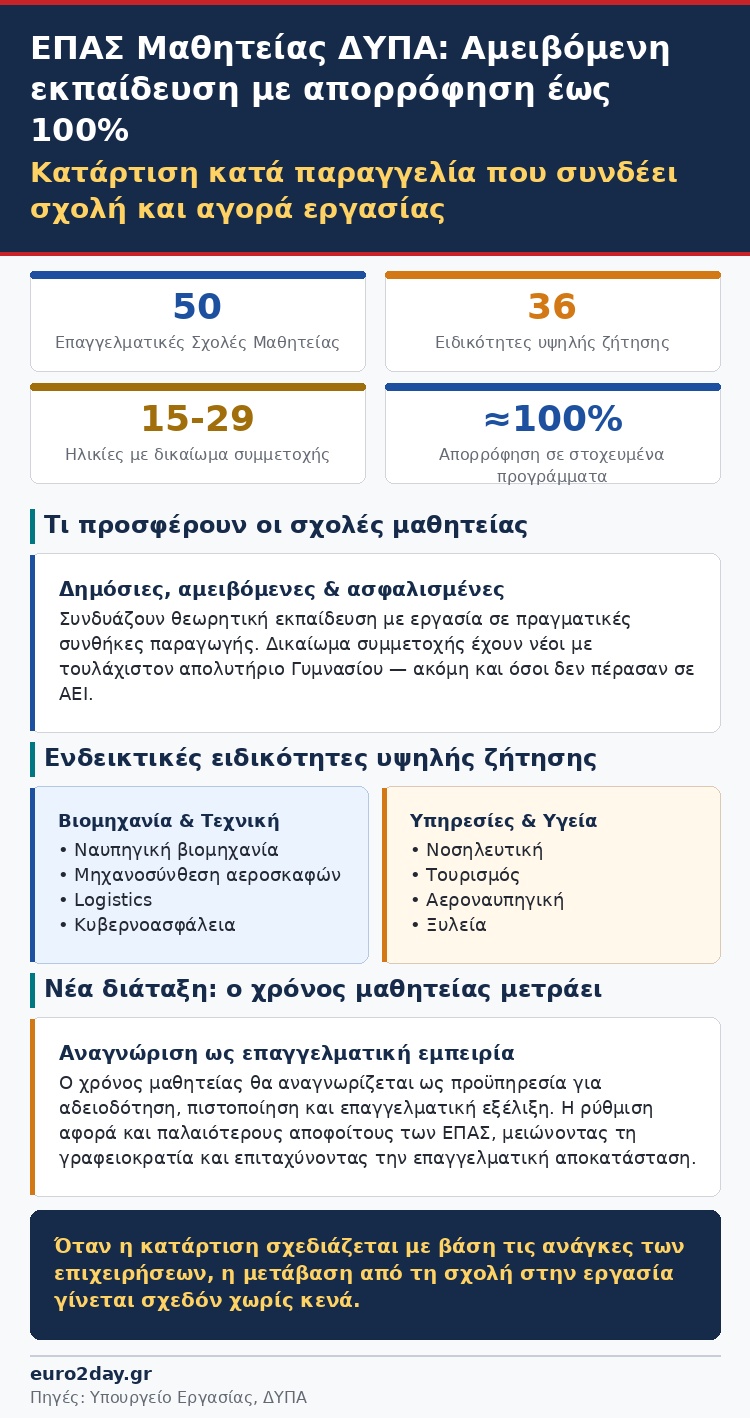
For the new school year, it has been decided that 50 DYPA Vocational Apprenticeship Schools (EPAS) will operate, and online applications for the 2026–2027 academic year have already begun. Students who were not admitted to a public university are also eligible to apply.
DYPA’s apprenticeship schools are public and offer paid and insured apprenticeships in 36 high-demand fields, ranging from the shipbuilding industry and aircraft engineering to logistics, cybersecurity, nursing, and tourism. Young people aged 15 to 29 who have at least a high school diploma are eligible to participate, and the program combines theoretical training with hands-on work in real-world production settings.
The Ministry of Labor considers this model crucial for addressing the shortage of technical and specialized professionals observed in many sectors of the economy.
Labor Minister Niki Kerameos has pointed out that close collaboration with companies facing specific staffing needs allows for the creation of targeted training programs, which almost automatically lead to the graduates’ successful entry into the workforce.
A prime example is the apprenticeship schools operating alongside major shipyards, where the training was designed based on the needs of the shipbuilding and repair industry and resulted in the employment of the overwhelming majority of trainees.
Similar initiatives have been developed in other sectors, such as aerospace and the timber industry, demonstrating that when training is designed in direct alignment with the needs of businesses, the transition from school to work occurs almost seamlessly.
Work Experience
The new provision included in the bill on remuneration—which is currently under public consultation—is also considered crucial for thousands of young and older graduates alike. The provision stipulates that apprenticeship time may now be recognized as professional experience for the purposes of licensing, certification, and professional development.
Until now, many vocational school graduates, despite having already worked as part of their apprenticeships, were required to accumulate additional work experience or repeat an internship in order to obtain professional qualifications. Under the new provision, experience gained during the course of study is officially recognized and may be counted toward the required qualifications.
This change is expected to accelerate graduates’ entry into the workforce, reduce bureaucracy, and further enhance the appeal of apprenticeships, effectively recognizing that work in real-world conditions constitutes substantial professional experience and not merely part of the educational process.
Of particular importance is the fact that this regulation applies not only to those graduating in the coming years but also to previous graduates of the DYPA Apprenticeship Vocational Schools. In this way, thousands of professionals who have already completed their studies are also given the opportunity to formally capitalize on the experience they gained through their apprenticeships.