It is now only a matter of time before the Independent Authority for Public Revenue (IAPR) issues a decision to activate the provision (Article 18 of Law 5293/2026), which will pave the way for the sale of thousands of properties that have been seized due to tax debts.
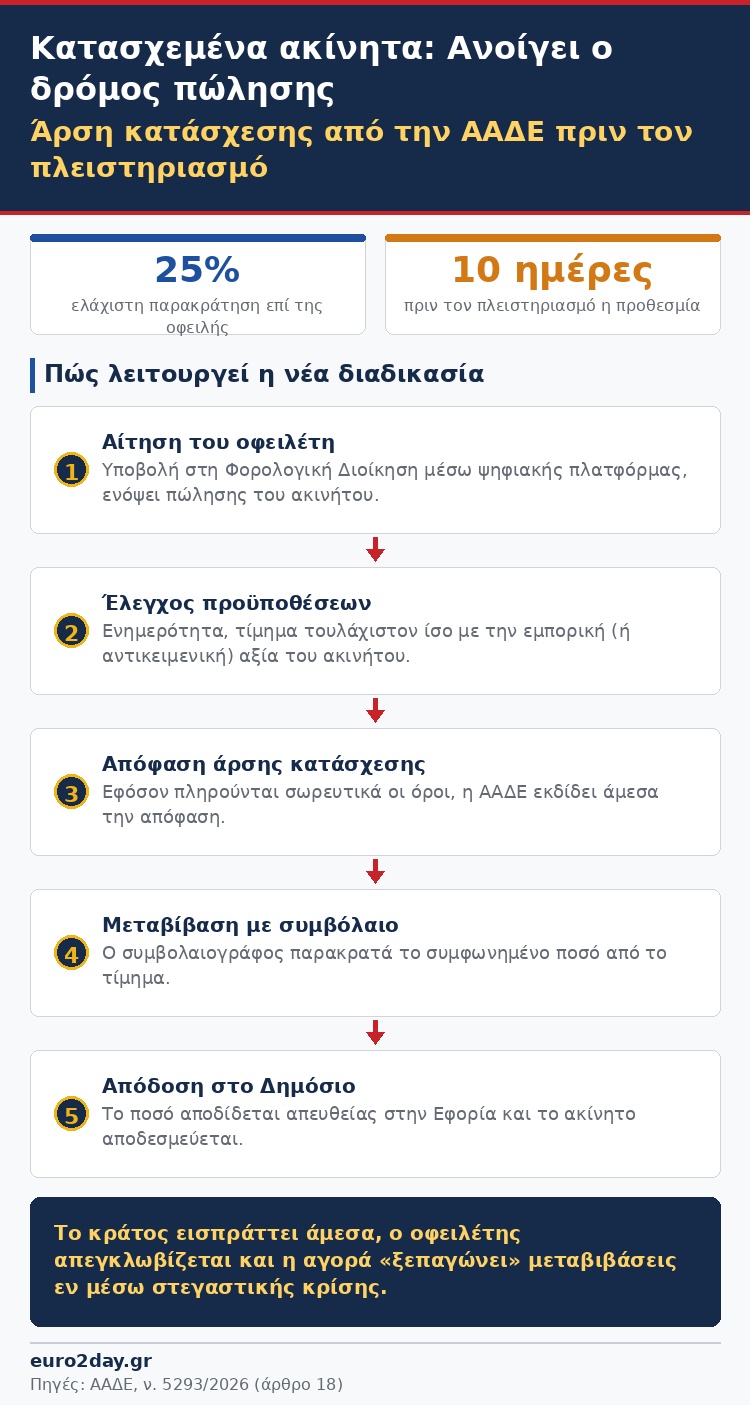
The measure will enable debtors to the state to release their seized properties for sale, so that the state can collect the debts and the debtors themselves can escape a dead-end situation.
The implementation of this measure is expected to free up thousands of properties that remain idle (due to foreclosure), allowing debtors to sell them on the open market before they end up at auction—provided, however, that part or all of the proceeds are mandatorily paid directly to the government.
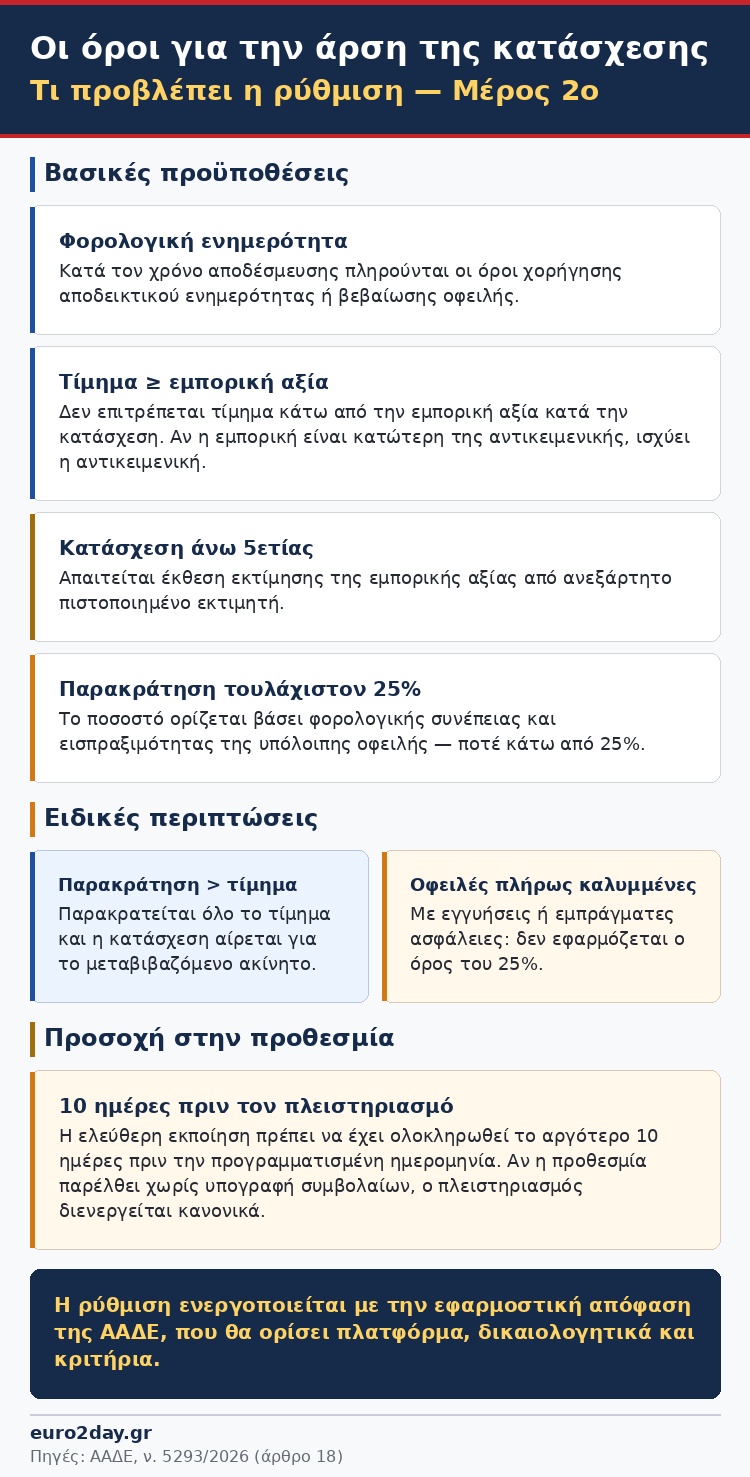
The withholding in favor of the State cannot be less than 25% of the debt, a condition that ensures repayment of the debt and releases the seized property upon settlement of the remaining debt.
Under the current system, a tax lien can block a transaction, even if there is an interested buyer and the possibility of the government collecting part of the debt. Under the new procedure, the Independent Authority for Public Revenue (AADE) will immediately collect a portion of the debts, while the debtor will be able to utilize their real estate, which until now has remained frozen.
At the same time, the real estate market gains a mechanism to “unfreeze” transfers of seized properties during a period of severe housing crisis.
Terms and Conditions
The terms, conditions, and general steps for lifting the seizure are outlined in the regulation, which takes effect upon the issuance of the Tax Administration’s implementing decision, which includes all technical details, the digital platform for submitting applications, as well as the specific supporting documents that taxpayers must submit.
Specifically:
* The Tax Administration, upon the debtor’s request, issues a decision to lift a lien it has imposed on the debtor’s real property for confirmed debts owed to the Tax Administration, in view of the property’s transfer for consideration, provided that all of the following conditions are met:
- At the time of the release, the conditions for issuing a certificate of good standing or a debt certification are met.
- The transfer price may not be less than the market value of the real estate, as determined at the time of seizure.
- When the market value of the real estate is lower than its assessed value, the assessed value is taken into account.
- If the attachment was imposed more than five years prior to the filing of the application, the debtor must submit an appraisal report on the market value of the property to be transferred, prepared by an independent certified appraiser.
- From the transfer price, an amount corresponding to a percentage of the total outstanding balance of the imposed attachment is withheld and remitted by the notary to the Tax Administration. The withholding percentage is determined based on the debtor’s tax compliance record and the collectability of the remaining debt, and in any case may not be less than 25%.
- If the amount resulting from the withholding is greater, the larger amount is withheld and remitted to lift the attachment.
- If the amount withheld exceeds the purchase price, the entire purchase price is withheld and remitted, and the lien is lifted on the transferred property.
- The notary who drafts the deed of transfer is responsible for withholding the agreed-upon amount from the purchase price and remitting it directly to the tax office.
- In any case, the sale must be made for a consideration deemed sufficient to cover the claims or a portion thereof, thereby preventing fictitious or undervalued transactions.
* If the confirmed overdue debts have been fully covered by guarantees or collateral, the 25% withholding requirement does not apply.
When the aforementioned conditions are met, the Independent Authority for Public Revenue (AADE) immediately issues a decision to lift the seizure. The Administrator determines the procedure, the form of the decision, its period of validity, and any necessary details, including the criteria regarding tax compliance and the collectability of the remaining debt.
Auction
It is worth noting that the voluntary sale process must be completed no later than ten days before the scheduled date of any auction. If the deadline passes without any contracts being signed, the auction proceeds as scheduled.