The financial assets of Greek households increased by 14.7% in 2025 and reached 401.9 billion euros, according to the 17th edition of the Allianz Global Wealth Report. The rate is much higher than that of Western Europe (4.5%) and the global average (8.6%).
The rise was driven by stocks and bonds, which increased by 34.4%. Insurance and pensions increased by only 3.8%, while deposits declined marginally, by 0.7%. Thus, the share of securities in Greek portfolios rose to 50.4%. It is above the average of Western Europe (36.8%) as well as the global average (46.9%).
The change is also evident in new savings, which amounted to 6.3 billion euros. Households bought securities worth 6.7 billion euros and made net withdrawals of 0.4 billion euros from deposits. Insurance and pensions added 0.5 billion euros.
In real terms, that is, after inflation, Greek financial wealth increased by 11.5%. It is the largest increase in Western Europe. Since 2019, the cumulative increase has reached 23%, while the regional average is just 0.5%.
Household liabilities increased more slowly, by 2.9%, to 114 billion euros. Thus, net financial assets increased by 20.1% and reached 287.9 billion euros. Per capita, they amount to 28,970 euros, up by 21.5%. With this amount, Greece ranks 28th in the world, just outside the top twenty. In 2005 it was in 22nd place.
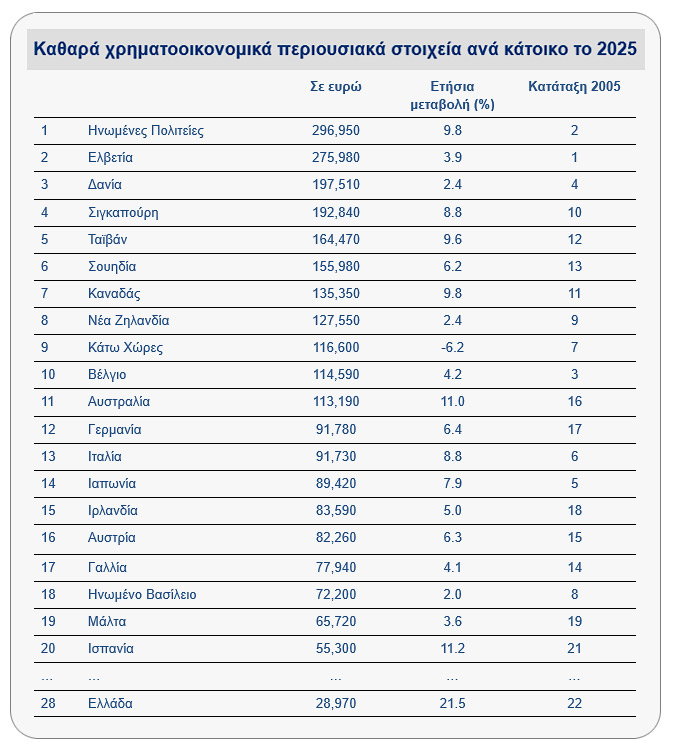
New record for global wealth
At the global level, household financial assets increased by 8.6% and reached the historic high of 268.4 trillion euros. Four out of every five euros of new wealth came from the rise in the markets. New savings fell by 5.4%, to 4.1 trillion euros.
Securities increased by 12.4%. Their rate was more than double that of deposits (5.7%) and insurance and pension products (5%). Thus, their share in global financial wealth reached the record 46.9%. Households in North America gained the most, with 60.7% of their portfolios in securities. The region accounts for 51.4% of the global increase.
“Since 2019, nominal financial assets have increased by 50%, but in real terms the increase is limited to 23%,” notes Ludovic Subran, Chief Economist of Allianz. In Western Europe the real increase is just 0.5%. In North America it reaches 21% and in China 70%.
For 2026, Allianz estimates a 9% rise in global financial wealth. However, it warns that slowing growth, persistent inflation, and high public debt will put pressure on returns. The picture could be changed mainly by artificial intelligence, which, however, makes household wealth more vulnerable. The S&P 500 has risen by about 95% since the end of 2022. According to Allianz, a 25% correction in the index would wipe out about 27 trillion dollars from the wealth of American households, almost 14% of their net worth. This could lead the American economy into recession.
The full study is available here.