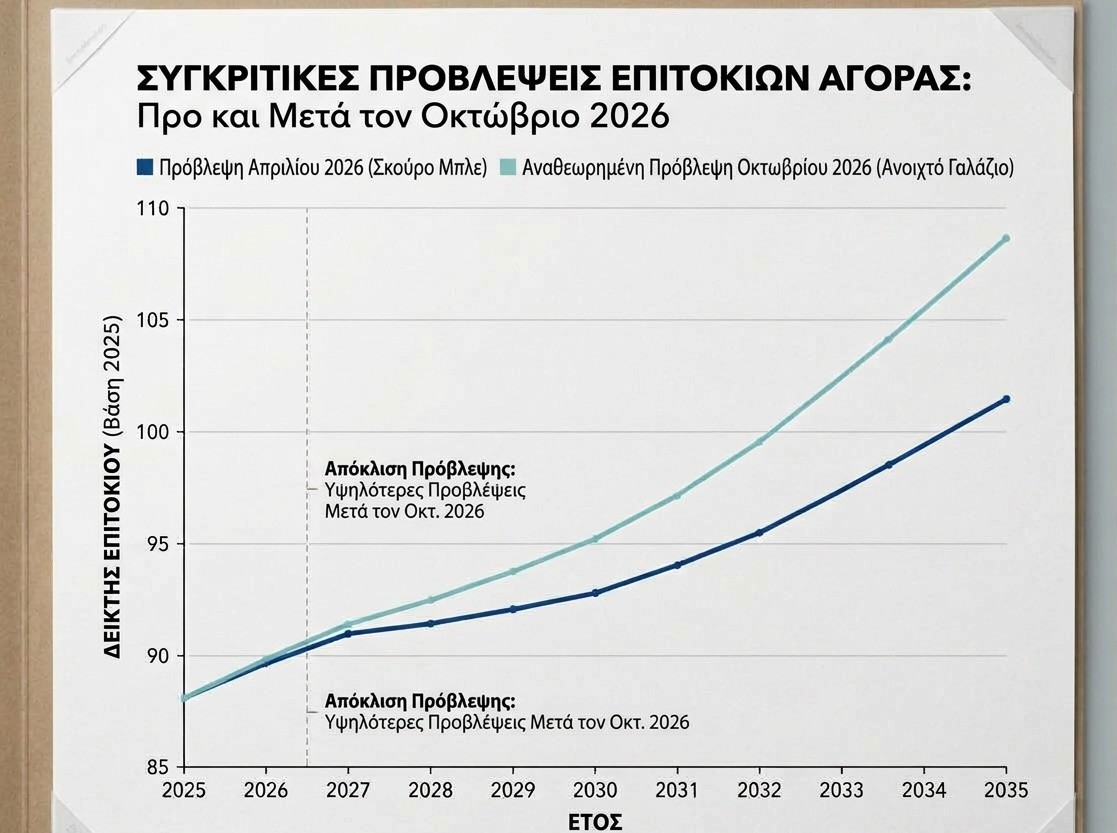
The eurozone will pay a heavy price for the sharp rise in borrowing costs, with interest rates at 10-year highs. The European Stability Mechanism warns that high rates will add 7.2% of GDP to eurozone debt by 2035, or about €520bn.
In an in-depth article published today, ESM chief economist, Rolf Strauch sounds the alarm over emerging fiscal challenges, setting out extensive data on the changes taking place in bond markets.
According to Strauch, average yields on 10-year eurozone government bonds reached nearly 4% in September 2026, driven mainly by global rather than domestic factors.
Rolf Strauch says the war in the Middle East and the resulting price pressures have reinforced market expectations that monetary policy rates will remain higher for longer in Europe, the US, Japan and other major economies.
Supply and demand
Another unexpected factor affecting borrowing costs is artificial intelligence (AI). Expectations that AI will continue to boost investment, productivity and demand for capital — particularly in the US — have pushed up long-term real interest rates, with spillover effects on eurozone government bonds.
The ESM warns that changing supply and demand dynamics in European public debt markets could lead to structurally higher and more volatile yields. In particular:
- Governments are issuing more bonds. They are being called on to spend more on defence, an ageing population, and the green and digital transitions. In addition, the supply of German bonds has risen significantly since the country reformed its “debt brake” in 2025.
- The European Central Bank is withdrawing from the bond market. As the ECB’s balance sheet normalises, private investors are now being called on to absorb a larger share of government bond issuance.
- Traditional demand from insurers and pension funds is declining. By contrast, the footprint of investors from outside the eurozone and leveraged funds is growing, making the market more sensitive to price movements.
- European governments face greater competition in raising funds, as large technology companies increasingly issue long-term debt not only in dollars but also in euros.
Although the fiscal impact will not be immediate, given that the average remaining maturity of eurozone public debt is close to nine years, governments will gradually have to refinance their debt at higher cost, Rolf Strauch says.
Based on the ESM’s projections, under current policies and interest rates, public debt will climb to 109% of GDP by 2035. That is 7.2 percentage points above forecasts based on 2024 interest rates, creating a significant financing gap.
To close this gap and comply with EU fiscal rules by 2035, the ESM’s chief economist says governments will need to adjust the medium-term plans they submit in 2028 by around 0.8% of GDP on average.
As political and fiscal uncertainty in some countries could trigger further turbulence, credibility remains the “first line of defence”.
The ESM recommends realistic plans, reprioritising spending, improving the quality of public expenditure, and prudent debt management that balances smooth repayment with maintaining a diversified investor base.
The ESM’s message to governments is that they must not waste time: “Because the impact of higher interest rates on debt-servicing costs will be gradual, there is a risk it will be overlooked. But governments must act now, while there is still room for manoeuvre,” Rolf Strauch says.