When this was written, the outcome of the US midterm elections was not yet known. The only things known were the pollsters’ estimates, which gave Democrats a more than 60% chance of taking control of the Senate and the House of Representatives, and betting firms such as Polymarket, which also put the odds of that outcome at more than 70%.
MAGA Republicans, meanwhile, appear confident they will retain control of the Senate. They point to pollsters’ errors in the presidential election two years ago, when Kamala Harris was tipped to win but Trump ultimately prevailed. Times have changed, of course: President Trump’s popularity has fallen to 31%, close to historic lows.
The election result may not have been known, but something else is — or should be — known to those who follow the markets.
Since 1950, the S&P 500 has gained an average of 15.1% in the 12 months following every US midterm election, regardless of the result. The same holds true when the period is extended back to 1942, covering 21 post-midterm periods.
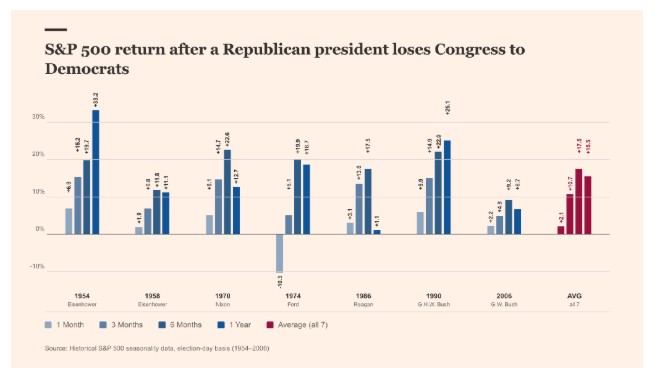
Moreover, history shows that the S&P 500 posts gains over the 1-, 3-, 6- and 12-month periods following midterm elections in which a Republican president loses control of Congress. The chart below shows exactly what has happened in the past.
In this case, if the polls and betting firms are right, President Trump will become the eighth president to lose both the House of Representatives and the Senate to the Democrats. On previous occasions when this happened, the S&P 500 returned an average of 2.1% after one month, with gains in six of the seven cases; 10.7% over three months, with gains in all seven cases; and an average of 17.6% over six months. The average return was 15.5% a year later, with gains in all seven cases following the midterm elections.
Of course, no one can predict exactly how stocks will behave after the current US midterm elections.
History favours a stock market rally, particularly over the six- and 12-month periods. But there is always a first time for a historical pattern to be broken. We shall see.