A rent that one salary cannot cover. A room that could be shared, if it were not for the anxiety about who might walk through the door. This is the picture painted by a new nationwide survey by MyRoomie, conducted from 5 to 12 August 2026 among a sample of 2,601 people aged 18–48.
According to the findings, 42% say they cannot currently rent a home on their own (38% can, while 20% say “maybe”), and 73% cite high rents as the biggest obstacle when looking for a home. Among 18–26-year-olds, that figure rises to 83%.
Economics says “yes”, fear says “no”
Flatsharing is not an unfamiliar concept: 80% know what it is, and 60% would consider living with someone they do not know. The motivations and obstacles, however, are clear and almost one-dimensional:
- 79% of those open to sharing a flat with a stranger cite the cost of living
- 88% of those who rule it out cite safety and trust
- 70% of all respondents consider safety the most important feature of a platform for finding a flatmate
In other words, demand is already there. Rents are driving it. What is missing is trust.
Fear is about the unknown, not experience
Asked how comfortable they would feel moving in with a stranger tomorrow, 55% answer “not at all”, while just 17% say “quite” or “very”. Among those who have already lived with someone they did not know (about 250 respondents), the picture is reversed: the share saying “not at all” falls to 15%, while those who feel comfortable rise to 53%.
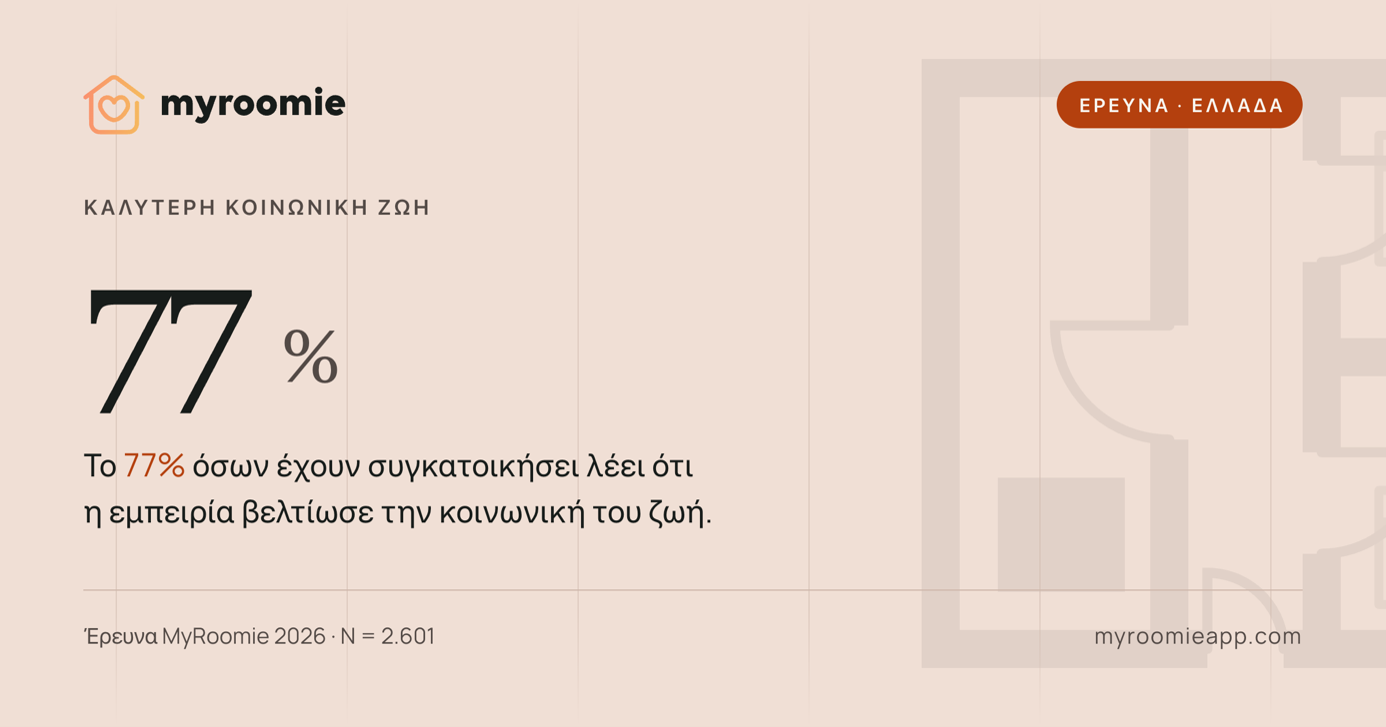
Meanwhile, 77% of those who have shared a flat say the experience improved their social life. Fear, then, seems to be mainly about what people have yet to experience, rather than a bad experience they remember.
Not instant friendship: financial relief and meeting new people
Asked what they liked most about sharing a flat, those who lived with a partner or friends mainly answer “the company” (41% overall). Those who lived with a stranger give a different answer: first, financial support (27%), followed by meeting new people (22%), which ranks last among all respondents, at 5%. The share citing companionship falls to 15%.
The real question: who does the washing-up?
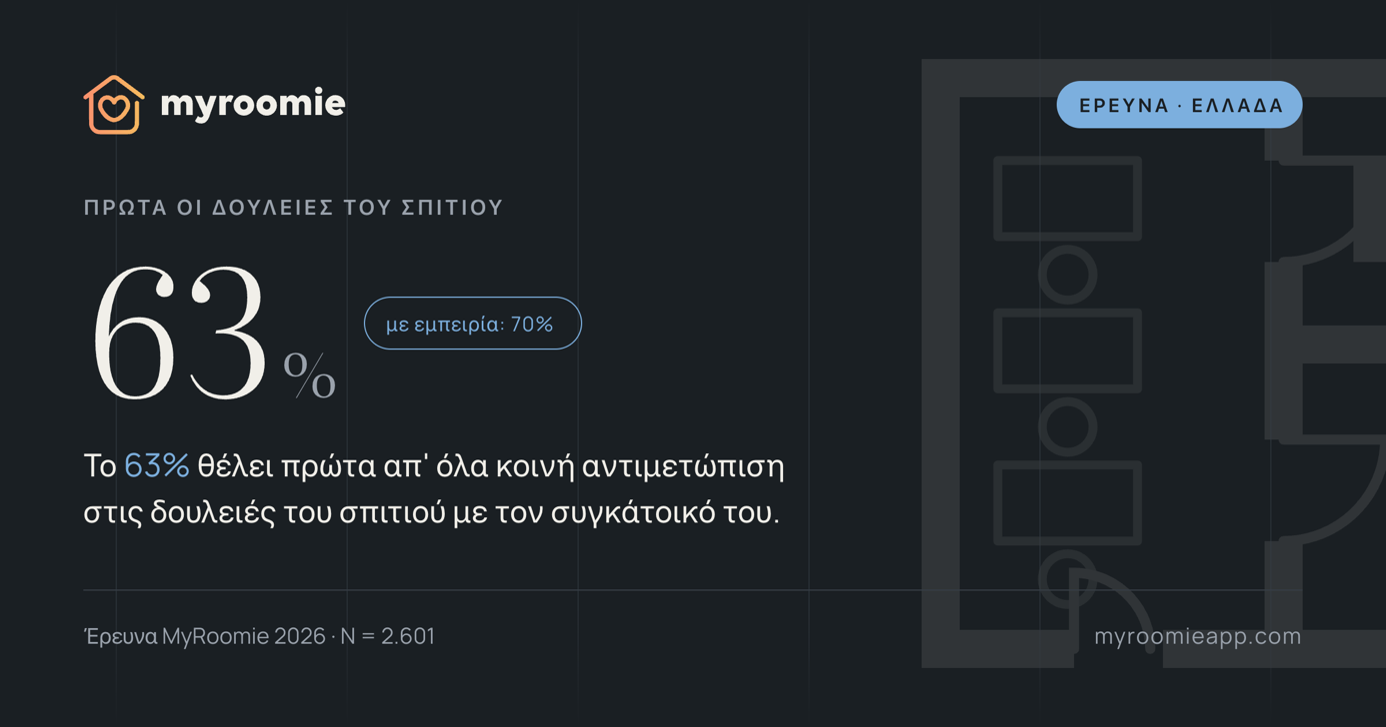
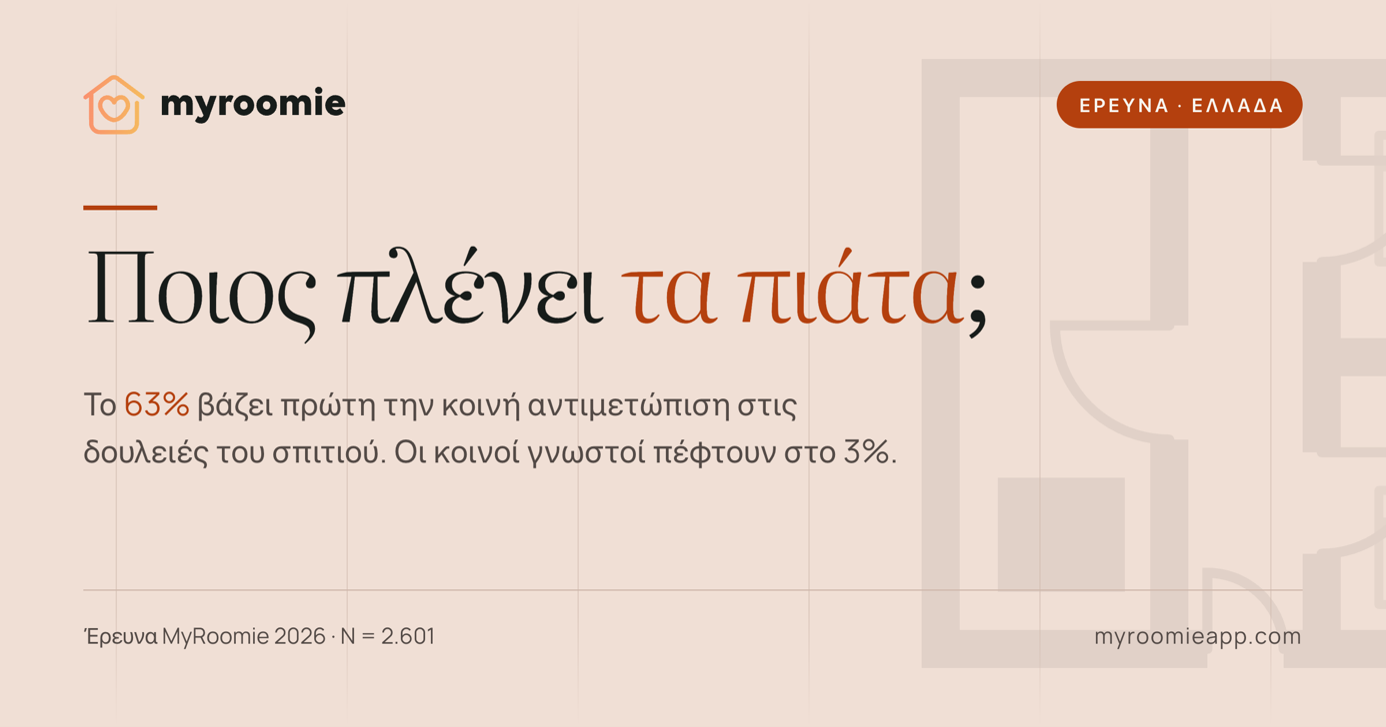
Asked what they want to have in common with a flatmate (multiple answers allowed), 63% put how household chores are handled first, rising to 70% among those who have lived with a stranger. Next come habits such as smoking and drinking alcohol (38%, and 56% among those who have lived with a stranger). By contrast, having mutual acquaintances drops from 11% to just 3%, while family status falls from 15% to 5%. Cleanliness and household chores are also the second most common concern in open-ended responses, after “fear of the unknown”.
Women: the greatest need, the biggest barrier
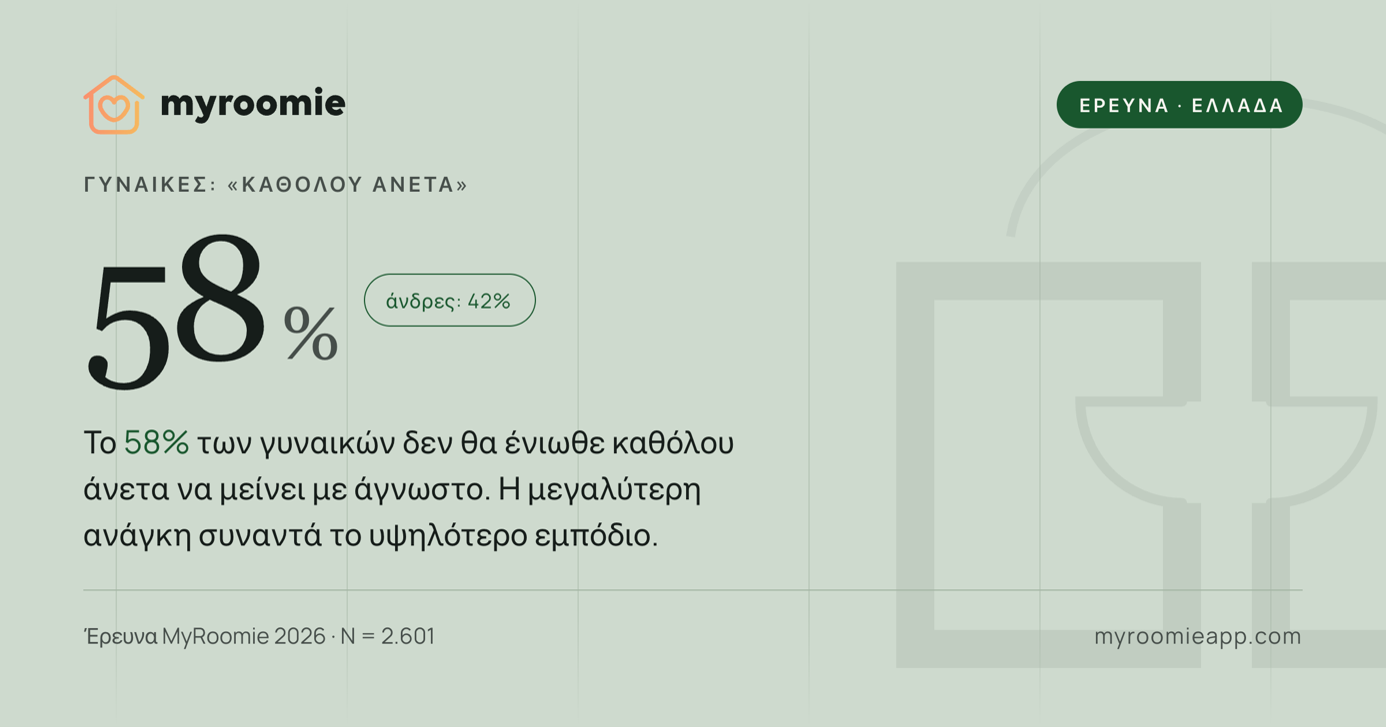
Women are both the group who find it hardest to rent a home on their own and the most cautious about sharing a flat with a stranger: 58% of women say they would feel “not at all” comfortable, compared with 42% of men. The greatest need and the biggest barrier affect the same people.
“There is no need to create demand for flatsharing. Rents are already creating it,” said Dominikos Pritis, founder and chief executive of MyRoomie. “What keeps the door closed is trust, and trust is not built with a verification badge. It is built by finding the right match on the things that matter in everyday life, getting to know each other before moving in, and setting clear rules from day one. Anyone who has had a good first flatshare is not afraid of a second.”