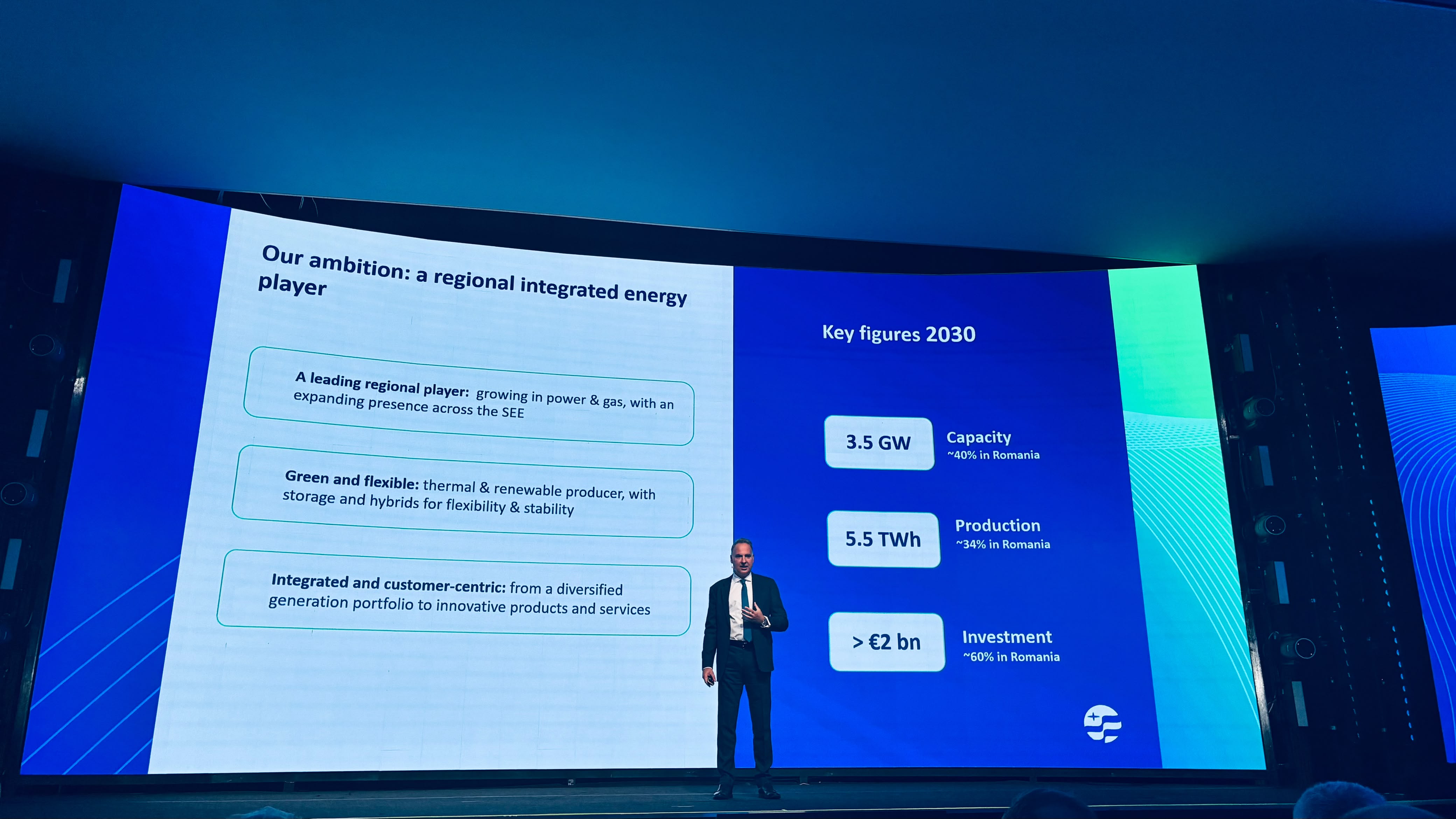
The growing importance of Romania to Helleniq Energy is reflected in its target for the neighbouring market to account by 2030 for 30% of the group’s total energy production, 50% of its installed capacity and 60% of its total investment.
In practice, this means that the neighbouring country is becoming by far the group’s most important market after Greece, as it is set to absorb 1.2bn-1.3bn of the 2bn the group will invest by the end of the decade in renewables, the wider electricity sector and natural gas.
These figures sum up the role the group envisages for the Romanian market, as outlined yesterday at a special event in Bucharest by the management team led by Andreas Siamisis. Helleniq Energy aims to become a strong, regional and vertically integrated player in the neighbouring country, with operations in both renewables and Power & Gas.
Within a few years, the Romanian market is also set to account for 1.4 GW of the group’s targeted total capacity of 3.5 GW across all technologies by the end of the decade, as well as 1.9 TWh of its total production target of 5.5 TWh.
While the CEO’s remarks stayed in line with the cautious growth model the group has consistently followed in recent years, avoiding reckless investment in a renewables market facing increasingly acute challenges, its new strategic approach to Romania appears a notch more aggressive.
Although the event marked the official launch of the subsidiary Helleniq Energy Renewables Romania, in practice the group’s management team spoke about its broader strategic expansion in the country. The event was attended by the country’s Environment Minister, Natalia-Elena Intotero, who welcomed the group’s commitment to invest in Romania, and Greece’s ambassador, Evangelia Grammatiká.
Why Romania
The reasons include how the carefully planned expansion in renewables and batteries fits with the group’s traditional refining business, but above all why Romania is now taking on such importance in its long-term plans.
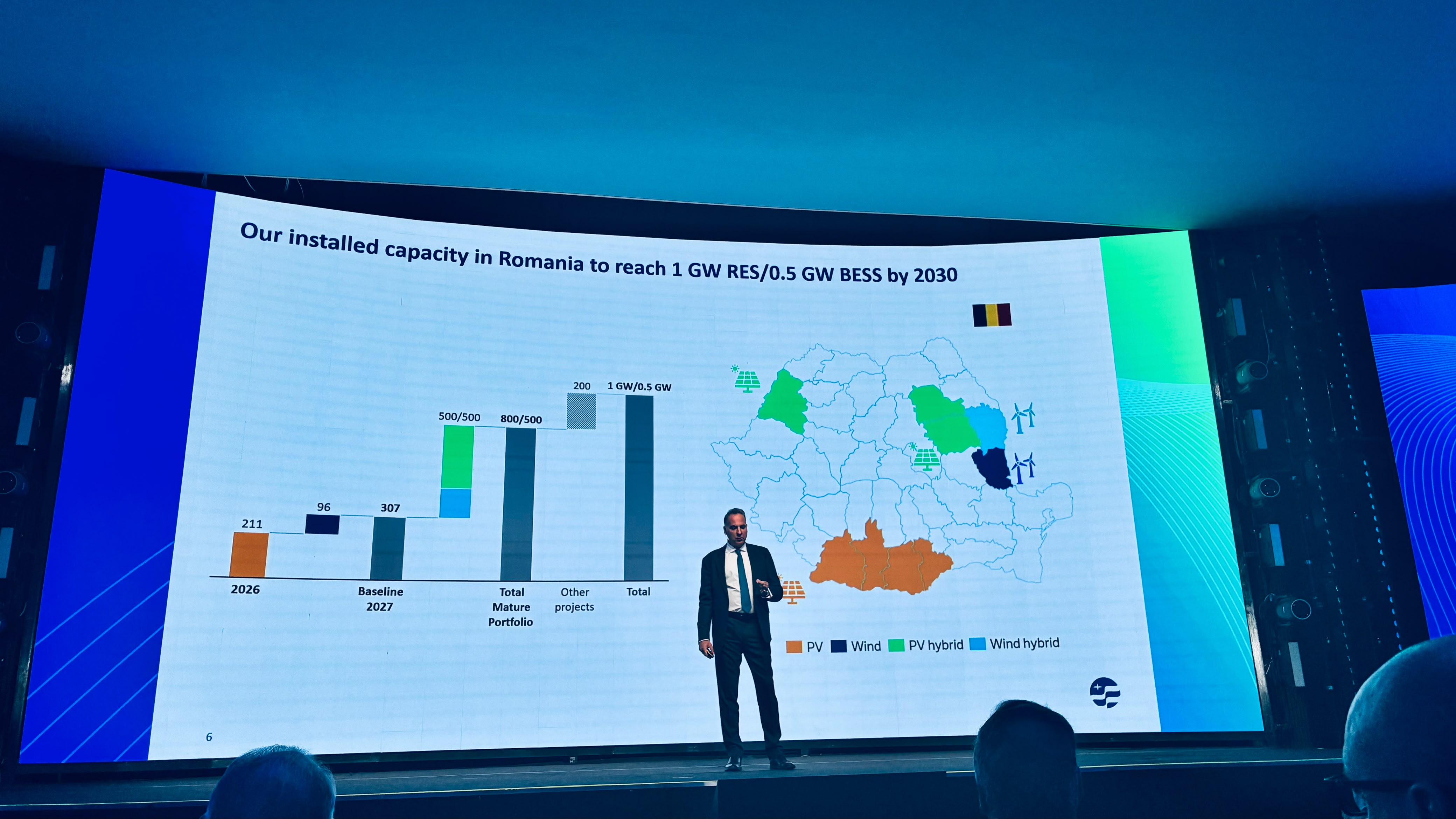
Asked “why Romania” — where the group has already invested 400m and has a portfolio of 0.8 GW of renewables projects, plus another 0.6 GW at various stages of development — deputy CEO George Alexopoulos summed up the answer.
1. The market is undergoing a structural shift towards renewables and batteries, with forecasts for 2040 pointing to growth rates of 24%, compared with much lower rates elsewhere in Europe.
2. The planned decommissioning of ageing coal- and oil-fired units is creating significant investment opportunities, as the capacity taken offline will be replaced by investment in renewables, batteries and flexible gas-fired units.
3. The market has a strategic position as an energy hub between the Balkans and Central Europe and offers significant advantages, including some of the continent’s strongest wind resources and land available for large-scale projects. The Greek group is, for example, completing its first wind farm in the east of the country, a 96 MW project in the Galați region.
4. Battery deployment may not match that in neighbouring Bulgaria, but installations are progressing at a satisfactory pace, allowing renewables to be used more effectively.
In short, Romania is aiming to become a strategic growth pillar for Helleniq Energy, not only in renewables but also in thermal power generation. Across these activities, the group has 1.6 GW of renewable and conventional capacity through Enerwave, along with 400,000 electricity and natural gas customers.
In renewables alone, operational projects are expected to reach 300 megawatts by mid-2027 and 1 GW by 2030, alongside 0.5 GW of battery capacity.
Under the group’s target, its own energy will supply close to 1 million households in Romania by 2030, while its investment programme will account for 18% of investment in large-scale solar, wind and battery projects in the country.
This does not mean hydrocarbons are no longer the main pillar of the group, which has turnover of 15bn and a market capitalisation of 5bn. However, its ambition to become a regional, integrated energy player in south-eastern Europe, in both electricity and natural gas, is now clear.