A fresh wave of price rises affecting dozens of products is under way across the market, adding to pressure on households.
Data seen by Euro2day.gr show that new supplier price lists include 350 product entries, corresponding to 340 different SKUs, with increases approaching 25% in some cases.
The price rises affect a wide range of goods, from dairy products, meat and frozen foods to baked goods, beer, snacks and cleaning products. The average wholesale price change is close to 5%, with the steepest increases in specific food categories.
Particularly sharp increases are seen in frozen fish, vegetables and dough products, where new prices are about 13% to 25% higher from 1 November.
Significant price rises are also recorded in dairy products. The new price lists include increases of 3.5% to 15%, with the steepest changes affecting feta and white cheeses.
The meat category includes 40 products with increases of up to 10%. In baked goods, price rises range from 2% to 10%, while increases in bread-based snacks are around 4%. The wave of price rises is also spreading to the beer market, with new price lists showing increases of 1.4% to 10.4% for 80 products.
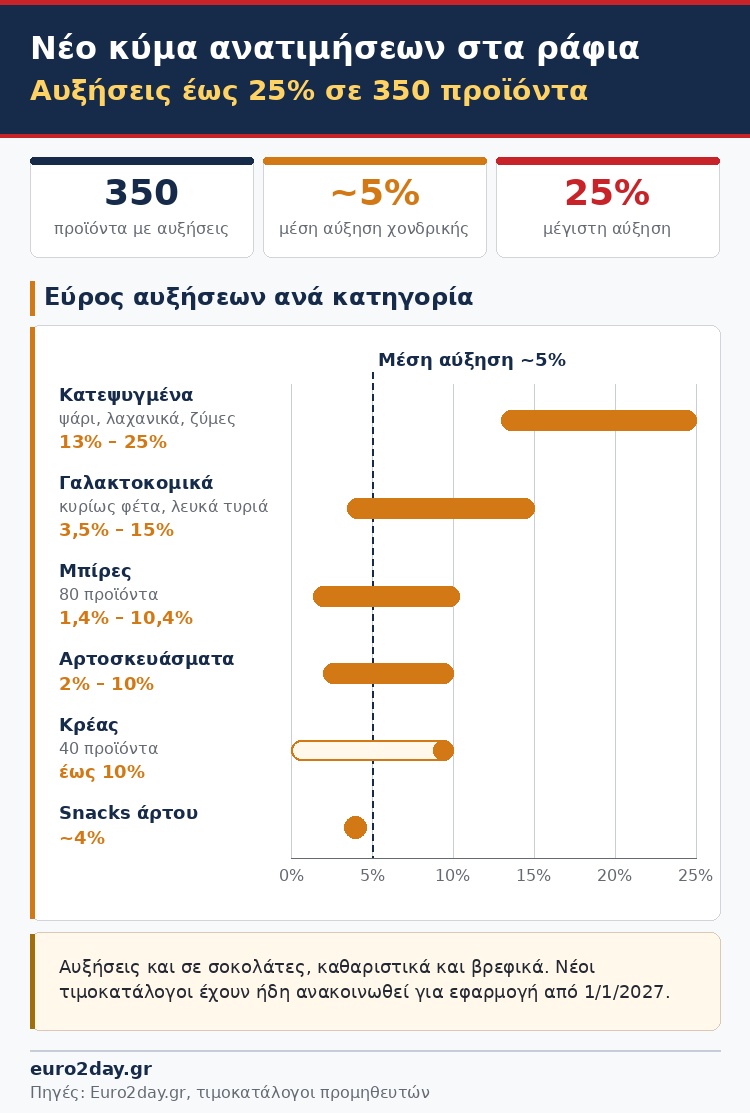
Price rises are also being recorded for chocolate products, cleaning products, baby products and dairy products. Nor will the pressure end with the close of the year: according to the same data, new price lists have already been announced, due to take effect from 1 January 2027.
The latest wave of price rises adds to the pressures households have faced in recent years. The new increases therefore add to an already high price level.
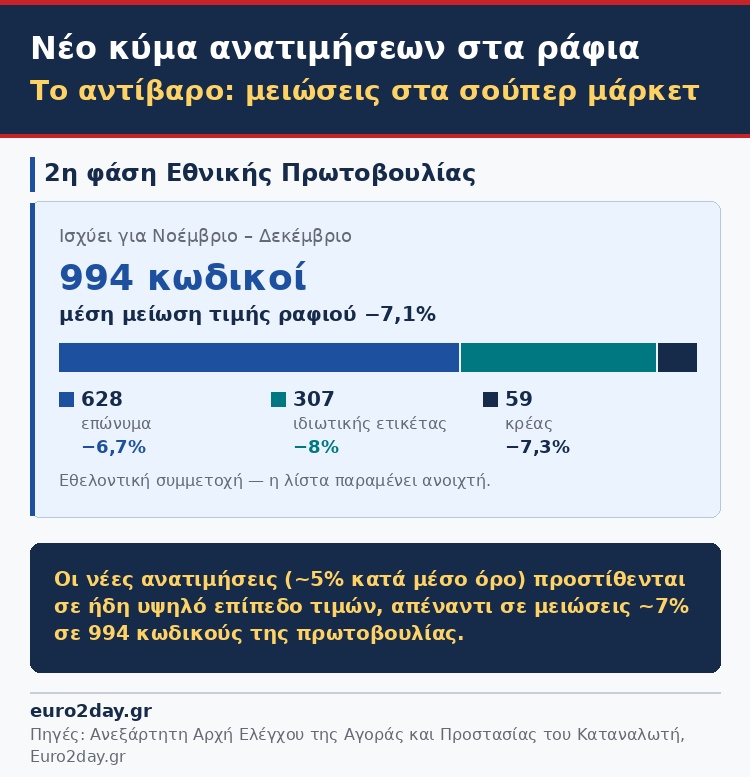
The second phase of the National Initiative to Reduce Prices in Supermarkets is also taking place against this backdrop. According to figures announced on 3 November by the Independent Authority for Market Control and Consumer Protection, 994 product codes have been included in the initiative for the final two months of the year, with an average reduction of 7.1% in the base shelf price.
Of these, 628 are branded products, with an average reduction of 6.7%; 307 are private-label products, with a reduction of 8%; and the remaining 59 are meat product codes, with a reduction of 7.3%. Business participation is voluntary, and the list remains open to additional products.