Expectations that falling natural gas prices would help ease pressure on electricity prices have been disproved by developments on energy markets, including Greece’s.
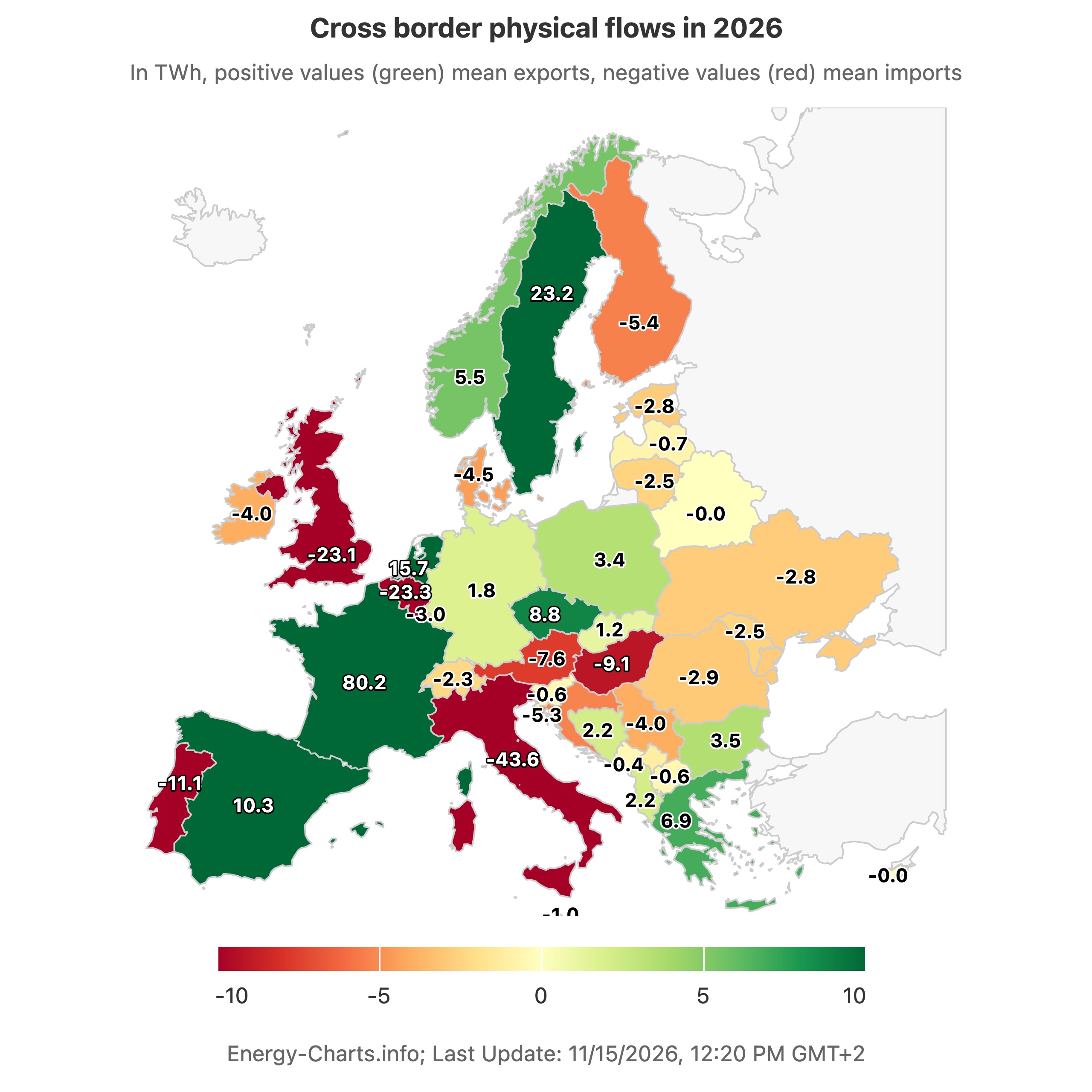
In reality, persistently low nuclear and hydroelectric output in south-eastern and central Europe is creating a large electricity deficit, forcing countries in the region to import at full tilt, mainly from Greece and Bulgaria, and sustaining the spiral of price rises despite the fall in gas prices, which nevertheless remain high at €90/MWh.
This domino effect is fuelling export demand, with Hungary consistently drawing large volumes of power from Romania, which imports large quantities from Bulgaria, while Bulgaria in turn draws comparable volumes from Greece every day in November. This has implications for prices across the region, and of course for domestic prices.
A glance at the map of cross-border electricity flows in the EU since the start of the year through to yesterday shows that Greece and Bulgaria are the only countries in the region consistently exporting electricity to their neighbours, pushing prices higher in both.
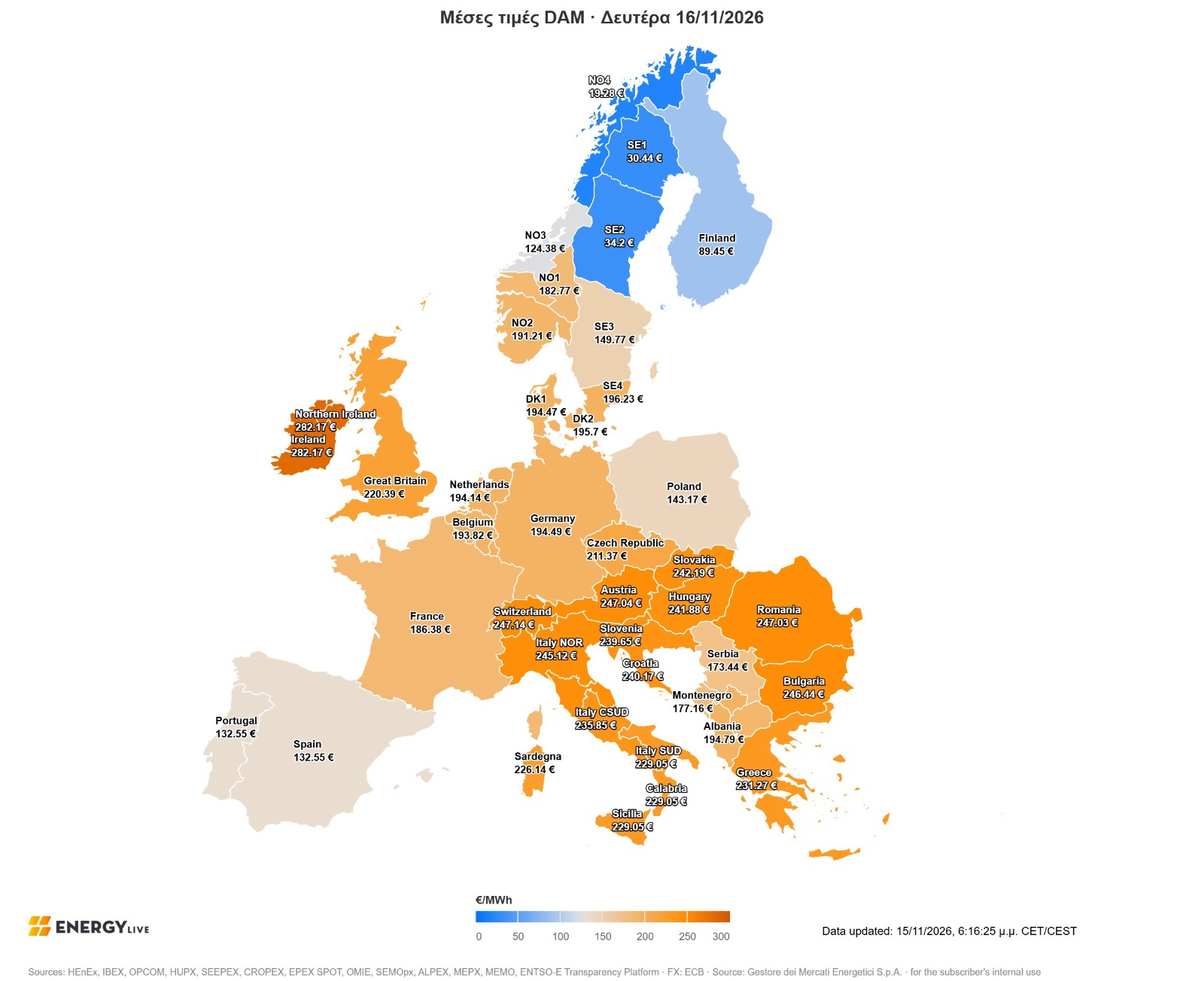
These factors, together with the seasonal decline in solar generation, mean that wholesale electricity prices are not only failing to fall but are up by an average of 30% by mid-November — €254.82/MWh, compared with €197/MWh at the close of October. Unless something changes, December will be the sixth consecutive month of increases for green tariffs.
About three million households still on the green tariff are entering winter with an average charge of close to 30 cents/kWh. Yet inertia and the reluctance of many people, especially older customers, to switch away from PPC — where the overwhelming majority of those on this tariff are — keep them trapped, even though there is no sign of prices easing.
Last week, the familiar combination of cloud cover cutting solar output and light winds, with obvious knock-on effects for wind generation, brought the phenomenon known as the “dark doldrums” (Dunkelflaute) back to almost all of Europe.
Winds have picked up again in recent days, but cloud cover persists. The same conditions prevail in Greece, keeping solar output low, with renewables accounting for just 41% of electricity generation today, roughly the same share as natural gas (40%).
The lower the contribution from solar, the fewer the zero-price hours around midday. That in turn helps hold down the average price — but not today, as the week begins with a wholesale price of €231.27/MWh, with a low of €97/MWh and a high of €309.18/MWh.
The good news is that, after months out of service, Romania’s Cernavoda nuclear power plant appears to have returned to full operation, which could reduce Romania’s imports from Bulgaria and, in turn, Bulgaria’s imports from Greece.
By contrast, natural gas prices have fallen from their highs of €103/MWh, but the €90/MWh level at which they have settled is still not low. That is the broader picture in the electricity market, and why analysts do not expect prices to ease in the coming period.
The “battle for flexibility”
Meanwhile, the government continues to wage its “battle for flexibility” in Brussels, seeking ways to subsidise both fuels and electricity in the coming months, despite the difficulty of finding funds in the budget.
Against this backdrop, Deputy Minister of Environment & Energy Nikos Tsafos is expected, according to reports, to meet EU officials and staff from DG COMP and DG Ener at the Commission’s headquarters today, in an effort to advance Mitsotakis’s request for fiscal flexibility ahead of the next European Council summit on 26-27 November.
The difficulty of the task is clear both from the silence surrounding the issue across Europe and from what Commissioner Jørgensen said at the latest Energy Ministers’ Council. Beyond the familiar advice to the 27 to “reduce gas and electricity consumption”, he made no mention of the issue at all.
Environment and Energy Minister Stavros Papastavrou had pressed the issue at the latest Council of Energy Ministers, arguing that the use of funds unlocked by the escape clause should be changed, so that spending is not directed solely towards investments such as “Exoikonomo” and heat pumps, but can instead be used for targeted, temporary support measures for consumers.