Gravity The Newtons’ initiative, AI Navigator, was unveiled for the first time at this year’s GenAI Summit, held at the Stavros Niarchos Foundation Cultural Centre. The discussion, titled “Making AI Work for Greece's Tourism SMEs”, explored how artificial intelligence can become a practical tool for small and medium-sized businesses in the tourism sector, starting with their real needs.
Stelios Zontos, chairman of the board of The Newtons Laboratory and head of Gravity The Newtons, said the aim of the AI Navigator initiative, developed by Gravity The Newtons in partnership with PwC, was to propose a new methodology to give small and medium-sized businesses practical support in taking their first steps towards adopting artificial intelligence: “The Greek economy, and not just tourism, relies heavily on small businesses, which lack the expertise and people needed to integrate artificial intelligence into their day-to-day operations.
We believe that, used in the right way, artificial intelligence can help these businesses grow. To make that happen, they need guidance, knowledge and, above all, collaboration”.
The new methodology is based on research conducted among small and medium-sized tourism businesses, which highlighted their needs and readiness to adopt new technologies. Drawing on the research findings presented at the GenAI Summit, a digital platform has been created to bring together and organise artificial intelligence use cases by activity and business sector, including hotels, restaurants and car hire, and to offer a practical roadmap for adopting artificial intelligence.
The platform is being piloted and will soon be open and accessible to everyone. While it starts with tourism, the methodology can also be used by small and medium-sized businesses in other sectors. The aim is for industry bodies, associations and chambers of commerce to make collective use of the initiative for the benefit of their member businesses.
The initiative was also discussed by Kyriakos Andreou, Partner, Senior Advisor, Strategy & Markets at PwC, and George Goudelis, Director, AI Strategy at PwC, who presented the research findings and the platform. Mr Andreou said: “Using artificial intelligence is not the same as adopting it.
Adoption means making it part of a business’s daily operations. That cannot be achieved simply by subscribing to a tool; it requires people to become familiar with it and receive training. Artificial intelligence is an absolute necessity for small and medium-sized businesses, but it is also a costly undertaking that we need to support. That was the thinking behind this project”.
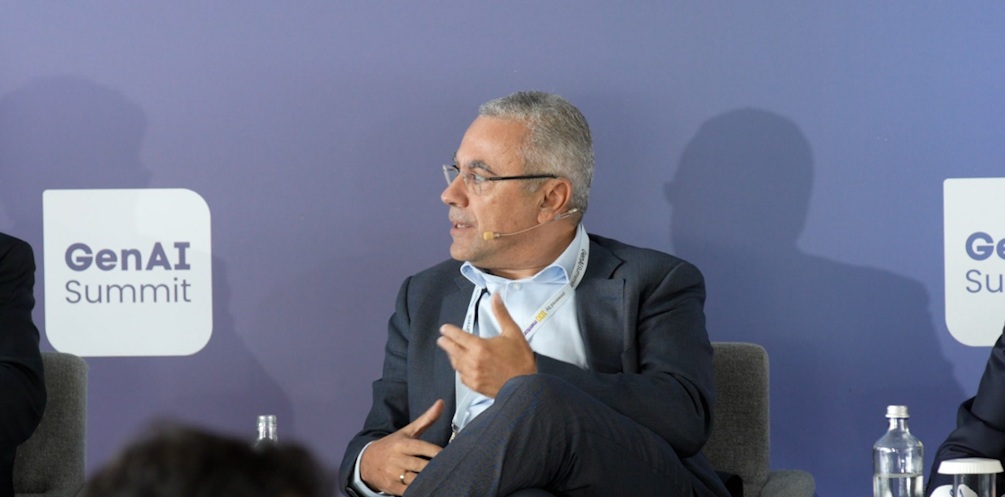
Kyriakos Andreou, Partner, Senior Advisor, Strategy & Markets at PwC
Presenting the platform, Mr Goudelis said: “A business does not need to embark on a complete transformation from day one. It can start with a specific area, experiment straight away, while also training its people and building trust from the outset. In practice, this is the formula that will help businesses find the right direction and scale up, with results that can be measured very quickly”.
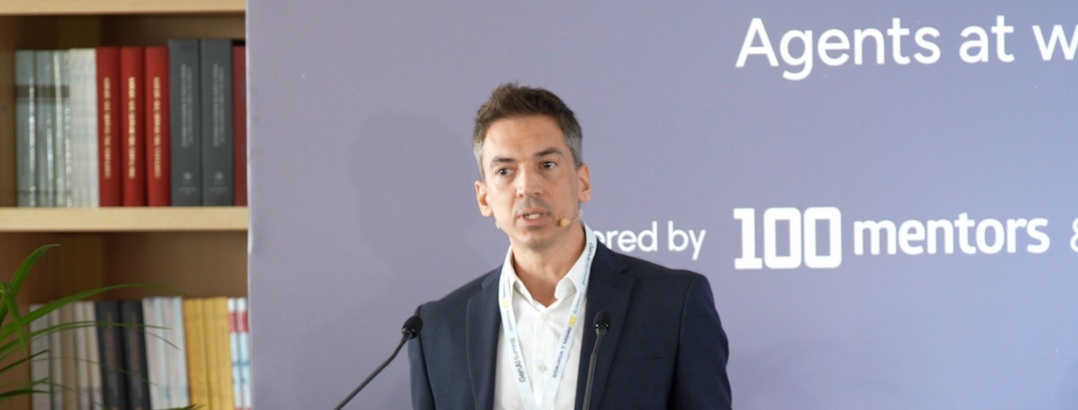
George Goudelis, Director, AI Strategy at PwC
Ilias Kikilias, Director General of the Institute of the Association of Greek Tourism Enterprises (INSETE), said artificial intelligence offered an opportunity to democratise productivity: “Small tourism businesses are the most important part of the identity of Greek hospitality, but they face a significant productivity disadvantage because they lack the resources, expertise and systems of larger businesses.
This is where artificial intelligence presents an opportunity: to democratise productivity. We do not need fewer small tourism businesses; we need more productive ones. But if we are to reach small hoteliers in practice, we must start with their needs, not with the supply of technical solutions”.
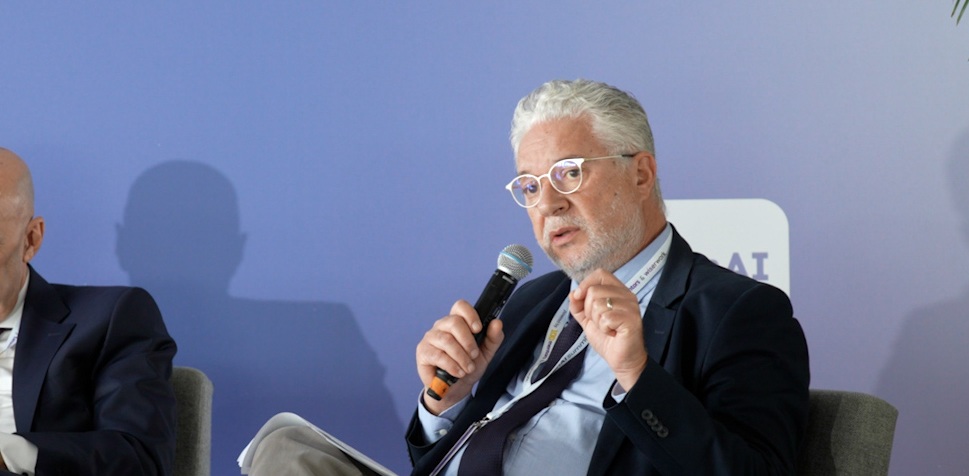
Ilias Kikilias, Director General of the Institute of the Association of Greek Tourism Enterprises
Speaking for the Athens Chamber of Commerce and Industry (ACCI), its president, Yiannis Bratakos, discussed the challenges posed by artificial intelligence, saying that for now we should remain sceptical about the extent of its adoption: “Small and medium-sized businesses are not ready today: they lack the expertise and the capital. There is a risk of creating an even wider gap between the country’s very large businesses and its very small ones, which make up the majority, leaving us with a two-tier artificial intelligence landscape”.
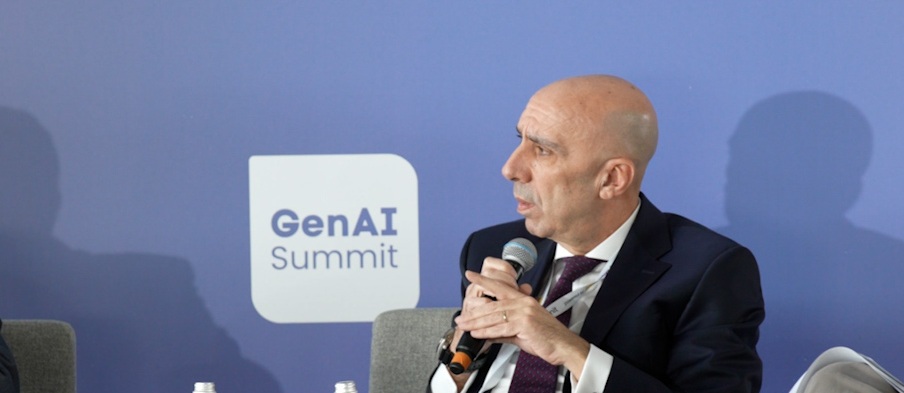
Yiannis Bratakos, president of the ACCI
The discussion, “Making AI Work for Greece's Tourism SMEs”, was moderated by journalist Loukas Velidakis.
Research: Nine routes to small businesses
Greece does not need more vouchers for digital tools. It needs a rule that is currently missing: no funding without first assessing a business’s needs. That is the conclusion of a detailed paper by Gravity The Newtons, which examined how nine countries, from Singapore to Ireland, have tried to bring artificial intelligence to small businesses.
The problem is well known. About 950,000 of Greece’s one million businesses employ fewer than 10 people, and almost half of the business-sector workforce works for them. Most will never have their own technology specialist. According to Eurostat, in 2025 only 8.9% of Greek businesses with 10 or more employees used artificial intelligence. The EU average was 20%, while Denmark reached 42%. There are no figures at all for microbusinesses.
Money is not enough
The clearest counterexample comes from the UK. Help to Grow: Digital offered a 50% discount, up to £5,000, to buy software, with the aim of reaching 100,000 businesses. In the end, just 830 vouchers were redeemed, while the total cost reached about £33 million. About £40 was spent for every pound of discount that reached a business. The evaluation attributed the programme’s failure to a lack of local promotion and tailored advice.
By contrast, the two programmes with the most rigorous impact measurement fund expertise. In Denmark, businesses receiving support from SMV:Digital, which subsidises half the cost of private-sector advice, increased their turnover by 16.7% over two years, compared with 8.7% in the comparison group. In South Korea, businesses that received vouchers for artificial intelligence projects had about 30% higher sales. Spain’s Kit Digital, the largest European programme, with more than 670,000 recipients, reached many businesses but delivered a productivity gain of just 1.2%. Madrid later added an advisory component.
The study also notes that programmes reaching businesses with the greatest need did so through institutions those businesses already trusted: chambers of commerce in Italy, trade associations in Portugal, local offices in Ireland and banks in Singapore.
There is demand
In Greece, the Recovery Fund’s “Digital Tools for SMEs” programme follows the Spanish model: it provides vouchers for tools, without an adviser. More than 411,000 applications were submitted in its second round for about 64,300 places. According to the study, the figure shows that, unlike their British counterparts, Greek small businesses are not indifferent. They are asking for far more support than they are being offered.
The country also has the infrastructure: 59 chambers of commerce, seven European Digital Innovation Hubs and, from 2026, mandatory e-invoicing for all businesses, usually handled through their accountant. Gravity describes this as a ready-made channel to one million businesses.
Two tiers, one rule
The proposal is built around two parallel tiers. The first is aimed at all micro and small businesses. It includes an online self-assessment and about three hours with a trained adviser from a chamber of commerce or an accountant, a catalogue of GDPR-compliant solutions in Greek, a three-month trial and basic tools. Microbusinesses would pay nothing.
The second tier is for businesses with a specific project. It funds specialist advice and implementation by certified private-sector providers, with the business contributing up to 50% in the case of larger firms. Providers would be paid based on the solution’s actual use, not just its delivery.
The two tiers are linked by a rule already applied in Ireland and Portugal: no diagnosis, no voucher. The evaluation would be designed from the outset, comparing turnover and employment using data from the General Commercial Registry and digital tax records.
How much would it cost?
In the study’s central scenario, 135,000 businesses go through the first tier at a cost of about €258 each, while 6,000 projects receive funding under the second. The total cost over three years comes to about €73 million, less than a third of the €226 million allocated in the two rounds of “Digital Tools for SMEs”. The scenarios range from €35.6 million to €126.8 million.
Gravity insists that the first tier must remain light-touch. If it included a diagnosis as in-depth as Ireland’s, costing about €3,500 per business, the same programme would exceed €470 million. The biggest uncertainty, however, is not the cost but participation. No one knows how many of those seeking vouchers would agree to go through a diagnosis first, and the British experience is a reminder that a programme can remain empty.
The nine cases at a glance
The final column assesses the strength of the evidence on outcomes, not whether the programme succeeded.
| Country | Main instrument | Scale | Main outcome | Evidence strength |
|---|
| Singapore | Pre-approved solutions, test beds, banks as a channel, subsidies of up to 50% | ~100,000 SMEs since 2017 | AI use among SMEs rose from 4.2% to 23.4% (2023–2025) | Moderate
Trend, not causation |
| Germany | Free, impartial advice; about 100 AI trainers | ~360,000 businesses (2021–2025) | Up to 33,524 businesses with increased sales | Moderate
Survey extrapolations |
| Italy | Chamber-based digital enterprise hubs, vouchers | 150,000+ businesses a year | Digital maturity up 8% since 2019 | Low
Activity indicators |
| Denmark | 50% subsidy for private-sector advice | ~3,500 projects (2018–2021) | Turnover up 16.7% versus 8.7% | High
Comparison group |
| South Korea | Vouchers of up to 200 million won, matching platform | 1,000+ projects (2020–2025) | Sales ~+30%; employment ~+6 points | High
Difference-in-differences |
| UK | 50% discount, up to £5,000, on software | 830 vouchers redeemed | Less than 1% of target; early closure | High
For process |
| Spain | €2,000–€29,000 digital voucher through certified providers | 670,000+ recipients | Overall productivity up 1.2% in one year | Moderate to high |
| Portugal | 25 local accelerators, diagnosis and vouchers of up to €2,000 | Target of 30,000 businesses; Lisbon: 3,958 | Not yet measured | Low
Activity indicators |
| Ireland | Free diagnosis, followed by a 50% voucher of up to €5,000 | 31 local offices | Sales up 21% (older voucher, self-reported) | Low
Survey of recipients |
High Moderate to high Moderate Low
Source: Gravity The Newtons, “Nine routes to small businesses”, November 2026.