A third deal, following Italy and Romania, appears to be in the works for PPC to strengthen its presence along the “Southeast European energy corridor”, this time in Bulgaria, involving batteries.
According to reports, the Greek group is eyeing a substantial portfolio of storage facilities in the neighbouring country. The deal could be concluded by the end of December and forms part of its bet on flexible generation across the wider region.
The move is intended both to provide a physical hedge against price fluctuations, bolster and make better use of its expanding renewables portfolio, and capitalise on opportunities in Bulgaria’s fast-growing battery market.
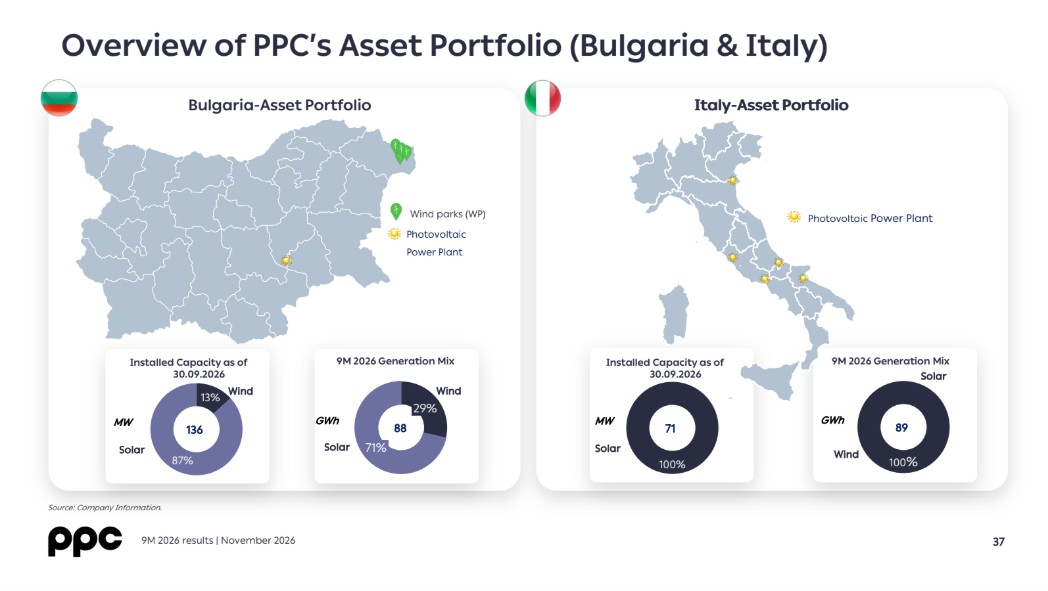
The move does not treat the neighbouring market as separate from the rest of Southeast Europe, which PPC sees as a single entity. Through the batteries it hopes to acquire there, in addition to its 136 MW of operational Bulgarian solar and wind capacity, it will in future serve a much larger portfolio of 550 MW of renewable energy projects that it has in the country at various stages of development.
The plan to build its own “peakers”
Deals will not be confined to the Bulgarian market or to batteries. Alongside expanding its storage fleet, PPC is moving ahead with the “peakers” plan it has been discussing since last year: small, flexible gas-fired units that come online when prices peak and are used by system operators during periods of very high demand, with corresponding payments to generators.
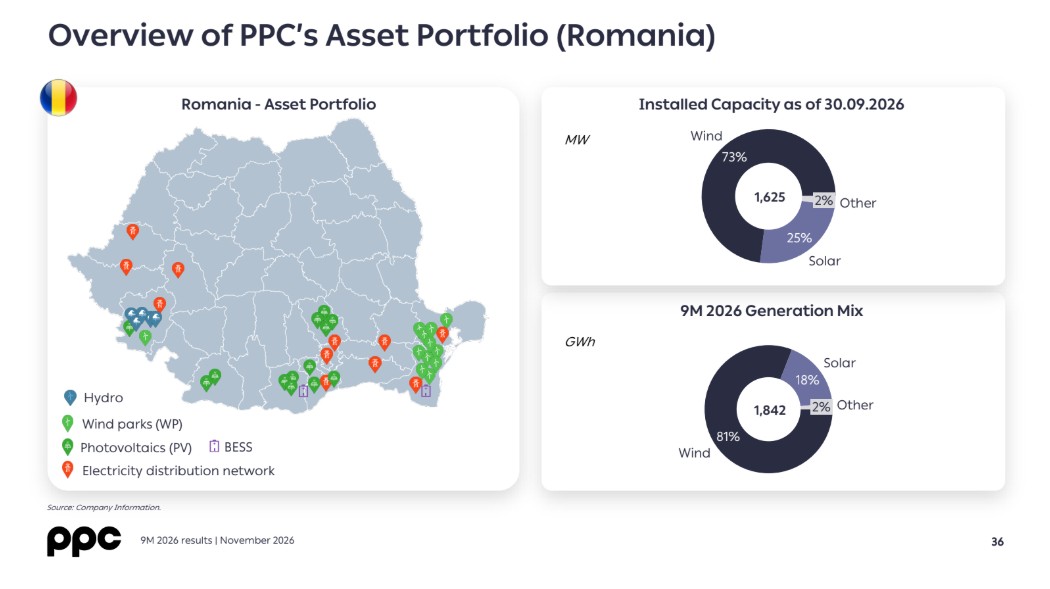
The first step, taken yesterday with the acquisition of five Romanian companies with solar, battery and natural gas projects for €93 million, appears likely to be followed by further moves.
According to reports, the next step will not be an acquisition but the construction by PPC itself of small natural gas units, both in Romania and possibly in other countries where the group operates.
Southeast Europe is well suited to this kind of investment, with major opportunities for balancing services, given the lack of flexible units. “Peakers” are one of many ways to counter market volatility and can address the intermittency of the group’s expanding green portfolio — when, for example, it is cloudy or the wind is not blowing.
Normally, days with no renewable generation require large gas-fired units to come online. But the problem often arises during the day for a few hours after sudden changes in the weather, such as unexpected cloud cover, that weather forecasts from the previous day failed to predict.
That is exactly what happened late on the morning of Monday, 23 November, when updated weather simulations showed milder conditions over Central Europe, curbing much of the projected increase in natural gas demand based on weekend forecasts.
Gas prices initially plunged, but afternoon forecasts again pointed to lower temperatures, driving prices higher towards the close of trading.
Such cases can only be managed through “local flexibility”, and PPC’s plans include building its own flexible units. In Bulgaria, the group is also set to build a large 820 MW gas-fired plant, as the expected retirement over the coming years of the vast majority of the country’s ageing coal-fired units will leave a significant gap and create opportunities to meet demand.
Why acquisitions of electricity suppliers in Southeast Europe are not over
The third move that could take shape as part of PPC’s €24 billion investment plan is the acquisition of another supplier.
Combining its customers in Greece, Romania and Italy — including 170,000 at Enagan — PPC now serves nearly 8.8 million consumers. It has achieved regional vertical integration across three markets, but that does not necessarily mean it will stop there.
Although in Poland it now has 175 GW of renewable energy projects in operation, plus a 1.3 GW pipeline, following its acquisitions of subsidiaries of Germany’s ABO Energy and Portugal’s EDP Renewables, the country’s large retail market is not fully liberalised, and state intervention limits effective competition.
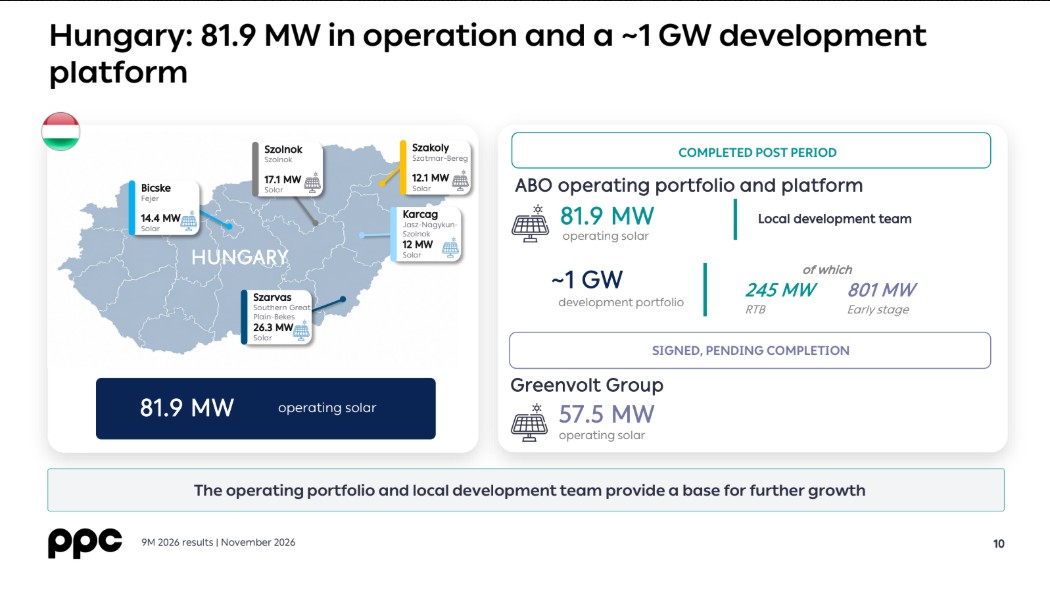
The situation is different in Hungary, which has strong interconnections with all the surrounding Central European countries and sets the tone for the wider Southeast European region. In this traditionally expensive electricity market of around six million consumers, the Magyar government is pursuing a pro-European, reformist economic policy, in contrast with its predecessor’s state interventionism. Those following developments believe a future move by PPC cannot be ruled out.
In practice, all of the above reflects the fact that the group views the entire region as a single entity with common characteristics, including limited interconnections and ageing power plants. CEO George Stassis described it in those terms when announcing the capital increase in April 2026 and presenting the new strategic plan.
Each country has its own advantages. Wind power is more attractive in the north, solar in the south and batteries everywhere. And because the region has traditionally had some of Europe’s highest wholesale prices, vertically integrated players with low-cost renewable generation can also earn higher returns.