One in four gas stations almost puts less gasoline in the car’s tank than what the meter shows and, of course, than what the consumer pays for. This discrepancy means an additional cost for consumers of 400 million euros per year, according to a study by NTUA and although non-compliance appears lower than in previous years, the figures are still large.
The peculiarity of this trick is that the State profits, as it collects more taxes than correspond to the actual gasoline consumption. Because the consumer pays for the liters they think they put in their vehicle and pays the corresponding tax.
The State’s revenues from all taxes are 36 billion euros, that is, they constitute half of the budget revenues. Of the 36 billion euros, 9.5 billion euros come only from VAT on petroleum products and the special consumption tax on gasoline and diesel.
Theft after tax
These taxes make up about 60% of the final price. However, the extra revenues from the taxes of some tampered pumps are very small compared to the tax losses from smuggling, officials from the Ministry of Finance explain.
It is enough to mention that of the total profits of the sector, 92% is directed to the State coffers in the form of special taxes, income tax, etc. The same sources add that the effects of a tampered pump spread like a stain throughout the market, as quantities appear and disappear out of nowhere.
Comparisons
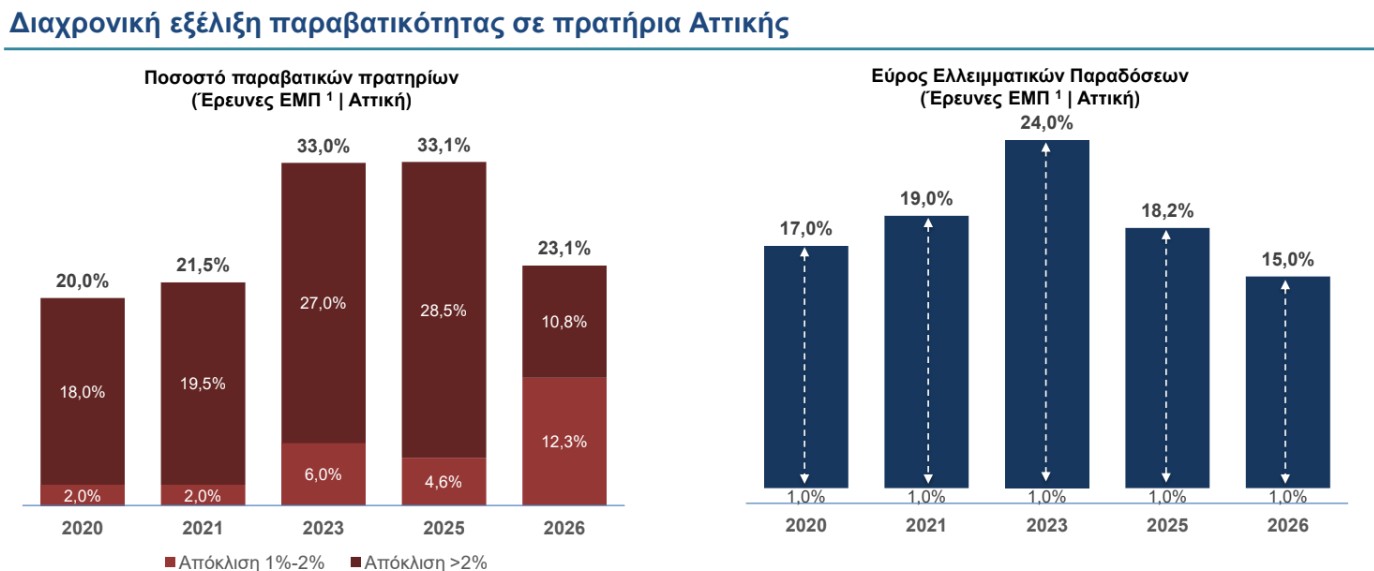
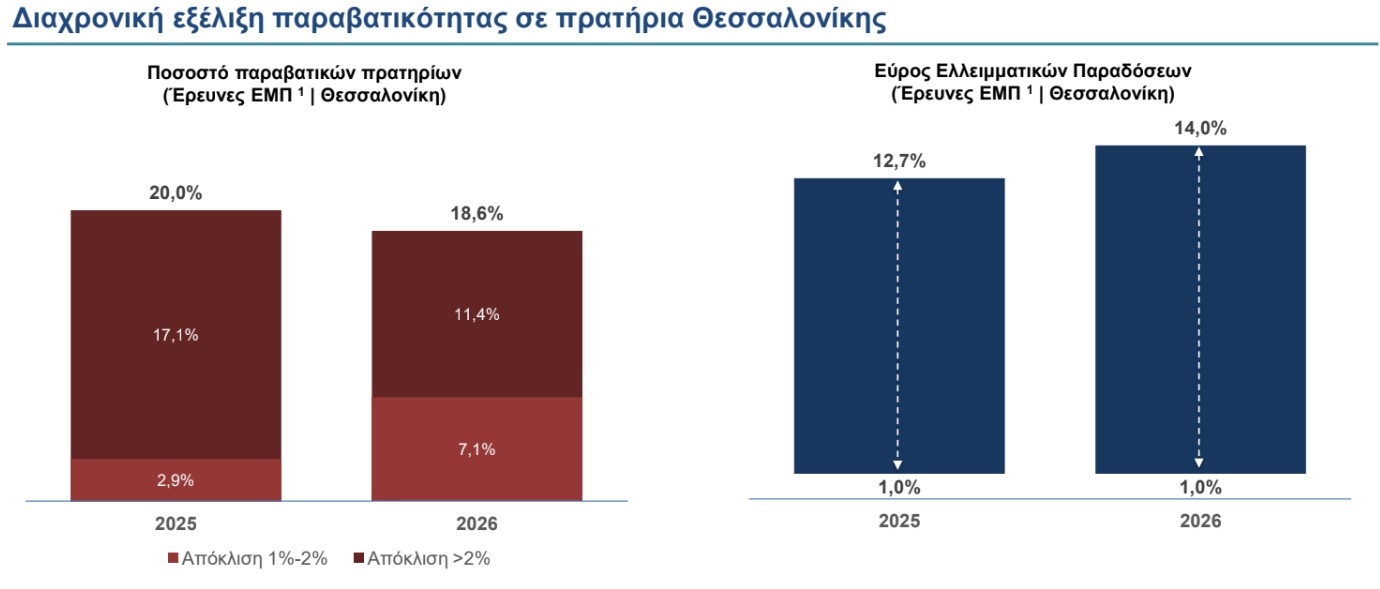
The question that arises is how, after so many years of operation of the inflow-outflow system, with parallel upgrades, tightening and improvements, Greece can remain together with Bulgaria and Romania among the countries with the highest rates of non-compliance within the EU, as 23.1% of gas stations in Attica and 18.8% in Thessaloniki fall outside the rules. Especially when the deviations between the actual and the theoretical quantity sold reach 15%.
Questions
If we accept that the gas stations that cheat in Attica exceed 2 out of 10, as recorded by NTUA, then out of the approximately 900 gas stations operating in the Basin, inspectors should have sealed or identified illegalities in more than 200. But AADE has proceeded to seal only 92 gas stations.
The numbers
If inspections across the entire fuel market are taken into account, that is, from customs (transport), quality (chemical checks) to the tank (quantity), then in 2025 16,450 inspections were carried out and 1,403 violations (8.5%) were identified. Again, the rate of non-compliance is lower than that resulting from the NTUA study.
How the hide-and-seek is played
A central place in the battle against non-compliance is held by the inflow - outflow system. It has been installed for many years in all gas stations, but its mandatory upgrade has so far been completed only in a percentage of about 40%.
The inflow-outflow system is based on the following assumption: What entered a gas station, exited. To this it adds the stock that each station may have had before refueling and subtracts whatever remained after the end of business hours.
These data are transmitted to AADE. If everything is done correctly, then the stock level at the end should match the figure that has been transmitted to AADE. If not, then side effects begin that are transmitted and “ring alarm bells” at various points in the market. Because something is left over… And then the inspections begin.
Whatever is left over goes to the “black” market
As senior officials of AADE’s audit services explain to Euro2day.gr, the inflow-outflow system is the main tool, which shows where there is a serious indication of non-compliance. What “is left over” usually ends up on the “black market,” where it will again appear as an inflow somewhere else. Monitoring is needed to identify the “source” that generates “stocks” out of nowhere.
Under the current legislation, only the “warning light” from the electronic inflow-outflow system is not enough for AADE to proceed with imposing sanctions or for the two-year sealing of the station to be imposed for two years, according to the new 2023 law.
Cooperation with the “Greek FBI”
For an inspection unit to reach the point of imposing sanctions and sealing the gas station, specific steps intervene, in which the Directorate for Combating Organized Crime (DAOE) or the so-called “Greek FBI” participates.
As soon as the “light” comes on and AADE receives the indication of possible illegality, the Greek FBI is notified and parallel surveillance and inspection operations begin with supposed customers -even with drivers of fuel transport trucks.
The goal is for the case to be “tied up” with evidence that will “withstand” the challenge and the arguments of the accused in court. Because whoever believes they have been wronged can appeal to Justice.
Also, the legislative framework has been tightened and provides, among other things, the following: If the same owner also maintains other gas stations with the same VAT number or has even a small percentage in a similar business, the sanction extends to them as well, even if they have not been subjected to inspection. Consequently, the sealing of one gas station can trigger a domino effect of inspections and other shutdowns or sanctions on many others or connected individuals or businesses.
Cases of organized crime
Behind a “tampered” pump there is not always a deviation of around 1% that appears once by chance. Experience has shown that behind such unlawful activities there are cases of organized crime with many branches. There has been a case where behind one gas station an affair unfolded involving dozens of people.
Intervention plan
For this reason, the inspection units of AADE or the Ministry of Development are not suitable to appear with the inspector’s identity. Special handling is needed by the police and by the Greek FBI, which monitors and creates an intervention plan, protection of the inspectors when the right moment comes, but also an escape plan for the inspectors in case something goes wrong.
A problem with deep roots
For all these reasons, AADE sources report, non-compliance in the fuel trade cannot be dealt with in one or two years, as a large part is related to organized crime. It is like trying to crack down on organized crime in one day or one year, they say characteristically
Nevertheless, significant improvements are being observed, as non-compliance has decreased by 30% in one year, mainly due to the tightening of the measure with the two-year sealing. Correspondingly, cases of smuggling and more general abusive behavior in the sector have also decreased.
Change of framework
According to government sources, the competent ministries are in discussions so that the system for detecting and suppressing such cases becomes more effective. One of these cases concerns the legislative framework, so that it allows faster procedures for the case to be “tied up.” The same sources indicate that the discussions are already at an advanced stage and legislative interventions and an upgrade of the AADE Strategic Plan are expected soon.
What the study shows
The data of the NTUA study conducted with secret sampling. The NTUA study states that in Attica, the percentage of short deliveries fell to 23.1% in 2026, from 33.1% in 2025, while deliveries found within the legal and/or acceptable limits increased to 76.9%, from 66.9% last year.
The deviations from the expected quantity reached up to 14.99% in 2026, compared with 18.2% in 2025, figures that show that combating non-compliance in Attica has yielded significant results, without however eliminating the need to continue inspections.
In Thessaloniki, the results also show improvement compared to the previous 2025 survey, however smaller comparatively. Both the percentage of short deliveries and the size of the deviation remain high.
81.4% of refuelings were found within the legal or acceptable deviations, compared with 80% in 2025, while short deliveries stood at 18.6% in 2026, from 20% last year. On the contrary, an increase was recorded in deviations from the expected quantity, which reached up to 14% in 2026, compared with 2025, when the percentage was 12.7%.